
Seagate IronWolf 4TB
4.5Editor score
Optimized for multi-user NAS
Includes data recovery service
5400 RPM low power
Network Attached Storage systems require drives built for constant operation. Choosing the right internal hard drive ensures your data stays safe and accessible without interruptions.
We evaluated ten leading models based on reliability, capacity, and NAS-specific features like CMR technology and vibration sensors for stable performance.
Each pick highlights key strengths and ideal use cases so you can match a drive to your needs. Prices change frequently so check current listings before buying.
4.5Editor score

4.7Editor score
3.9Editor score
As an Amazon Associate we earn from qualifying purchases.
The table below summarizes key specifications for all ten models so you can quickly compare capacity, speed, and warranty terms side by side.



The Seagate IronWolf 4TB is a strong entry point for small NAS setups needing reliable storage without high costs. It holds a 4.5-star rating from users who appreciate its steady performance in home environments.
We may earn a commission when you buy through this link, at no additional cost to you.
This drive uses CMR technology which is essential for NAS to avoid the performance penalties of SMR during file writes. It includes IronWolf Health Management to let you monitor drive status directly from your NAS dashboard for early warnings.
While the 5400 RPM speed is slower than faster models it reduces heat and power usage which matters for always-on systems. The 64MB cache is smaller than high-capacity drives but sufficient for light home file sharing and media streaming.
If you need basic storage for a few users and want protection via data recovery services this drive offers great value. It is ideal for first-time NAS owners who want stability over raw speed.
Designed for up to eight-bay systems it minimizes vibration and noise to keep your office or living space quiet during operation.
The included three-year Rescue Data Recovery Service helps safeguard your files against accidental loss without needing a separate insurance policy.
We may earn a commission when you buy through this link, at no additional cost to you.
The Seagate IronWolf 10TB stands out as an editor favorite because it balances speed capacity and reliability for serious home and office NAS systems. Its 4.7-star rating reflects strong satisfaction among users running media servers and backups.
We may earn a commission when you buy through this link, at no additional cost to you.
Built with AgileArray technology it uses dual-plane balancing to handle the stress of multiple users accessing files at once. The rotational vibration sensors detect movement from other drives in the enclosure and adjust to prevent data errors.
Its 7200 RPM spindle speed delivers sustained transfers up to 210MB/s which is fast enough for video editing and large file syncs. The 256MB cache smooths out burst writes so performance stays consistent during heavy use.
Choose this drive if you need substantial storage without compromising on speed or durability. It works well in RAID setups where consistent performance across all drives ensures your array rebuilds quickly and safely.
Optimized for continuous operation this drive can handle workloads up to 180TB per year which suits small businesses and power users.
IronWolf Health Management integrates with major NAS operating systems so you get clear alerts about drive health without third-party tools.
We may earn a commission when you buy through this link, at no additional cost to you.
This Seagate IronWolf 10TB offers the same core reliability as its sibling but at a price that sometimes varies by region or seller. It remains a top choice for users wanting a blend of capacity and performance without enterprise costs.
We may earn a commission when you buy through this link, at no additional cost to you.
Its NAS optimization ensures it runs cooler and quieter than desktop drives when used in enclosures. The CMR technology avoids the write slowdowns that SMR drives suffer when managing large files or RAID operations.
With a 256MB cache and 7200 RPM speed it handles multitasking well across multiple users accessing the same drive simultaneously. This makes it suitable for small teams sharing project files or media libraries.
The included Rescue Data Recovery Service adds a safety net for critical data which is valuable for users who do not have separate backups. If you want a proven drive with strong support this model delivers.
Designed specifically for NAS bays it reduces wear and tear on the drive platters over long periods of continuous operation.
Improved file-sharing performance means quicker access times for photos documents and videos across your local network.
We may earn a commission when you buy through this link, at no additional cost to you.
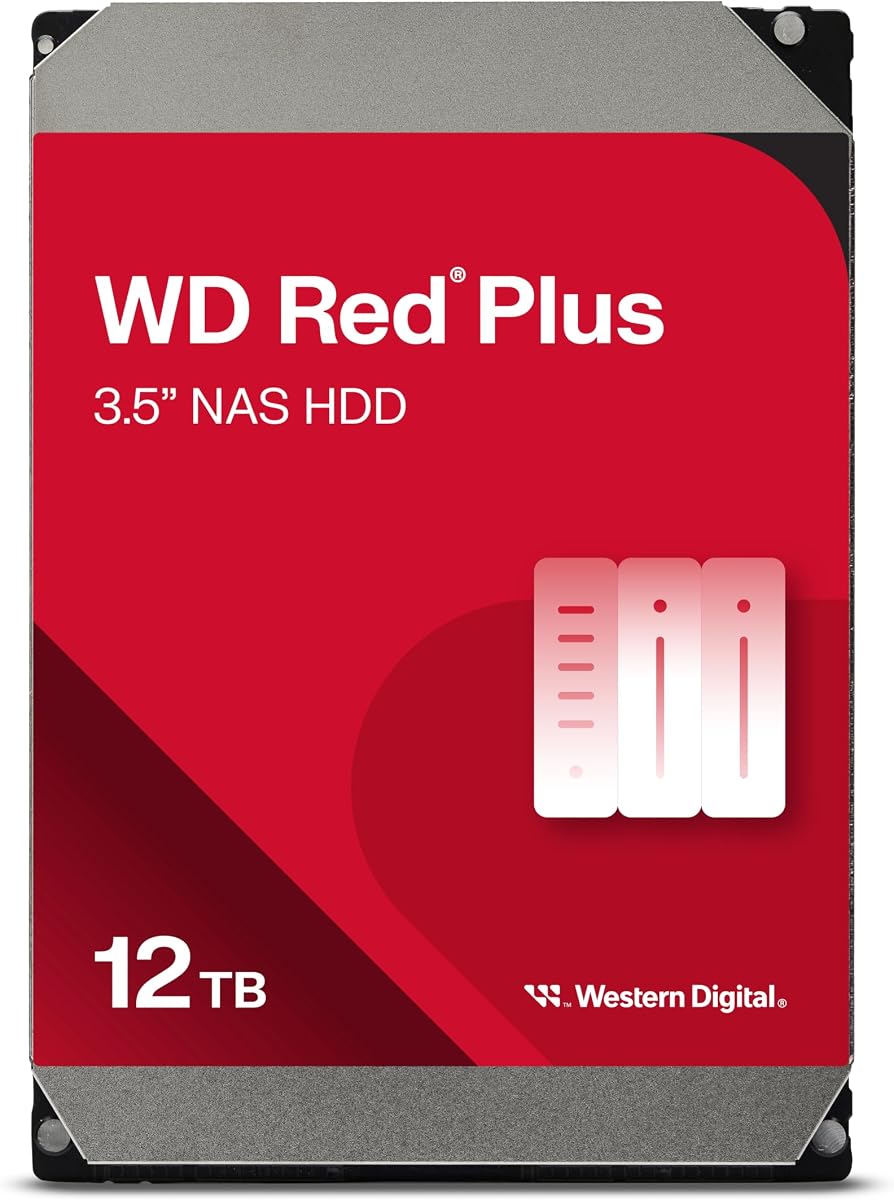
Western Digital WD Red Plus 12TB is designed for users who need substantial storage with the reliability of CMR technology. It supports up to eight bays and comes with NASware firmware tuned for RAID environments.
We may earn a commission when you buy through this link, at no additional cost to you.
Its 7200 RPM speed and 512MB cache offer decent performance for general file storage and backup tasks. The drive is built to handle workloads up to 180TB per year which fits small business needs well.
While some users report mixed feedback on noise levels the drive generally performs consistently under normal home or office conditions. The NASware firmware ensures compatibility with popular NAS operating systems without extra configuration.
If you prefer Western Digital drives and want a high-capacity option that avoids SMR this model is worth considering. It is a good fit for users who need a simple large drive without extra bells and whistles.
This specialized firmware optimizes the drive for RAID and NAS systems to improve reliability and reduce errors during operation.
Ideal for small or medium business NAS systems running in 24×7 environments for consistent data access.
We may earn a commission when you buy through this link, at no additional cost to you.
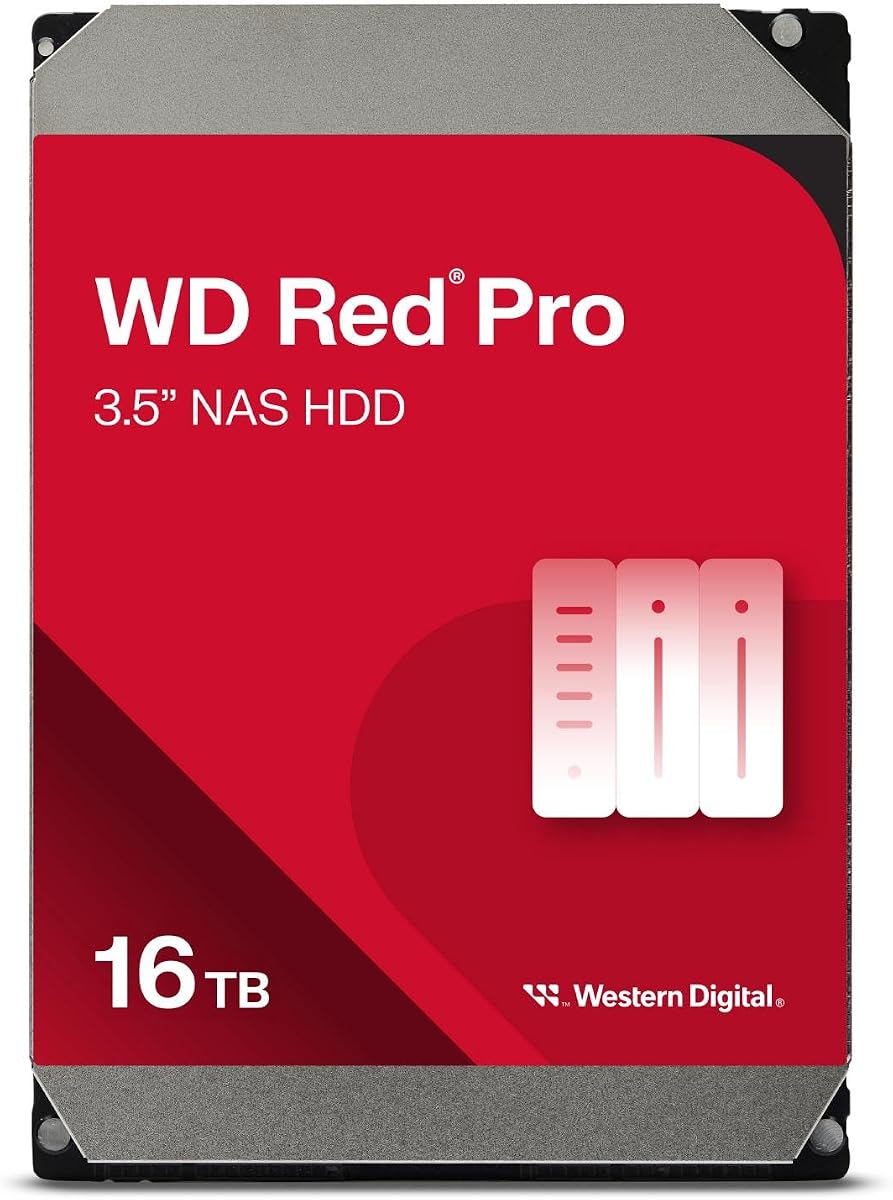
The WD Red Pro 16TB is a premium drive built for demanding environments with unlimited bay support and high workload tolerance. It handles intensive 24×7 usage better than standard NAS drives and fits enterprise setups.
We may earn a commission when you buy through this link, at no additional cost to you.
Its 7200 RPM speed paired with 512MB cache ensures fast data access even under heavy load. This makes it suitable for media rendering farms or large file servers with many concurrent users.
Western Digital partners with NAS vendors to test these drives ensuring they work with most enclosures without issues. The higher workload rating gives confidence for continuous use in professional settings.
Choose this drive if capacity and endurance are your top priorities and budget is less of a concern. It is ideal for users managing large datasets who need stability over many years.
Rated for 550TB per year workload this drive stands up to continuous heavy use without performance degradation.
Western Digital works with a wide range of NAS system vendors to ensure compatibility and optimal performance.
We may earn a commission when you buy through this link, at no additional cost to you.
Western Digital WD Blue 12TB is a desktop drive that can be used in NAS systems though it lacks specific NAS optimizations. It has strong reliability ratings and comes with free cloning software to help you migrate data.
We may earn a commission when you buy through this link, at no additional cost to you.
Users appreciate the brand quality and the speed of 7200 RPM which handles typical file access well. The 512MB cache supports smooth performance for standard tasks and occasional large transfers.
While it works in NAS it is not specifically tested for 24×7 multi-user environments like Red or IronWolf drives. Use it only if your NAS will see light occasional use and you want a budget-friendly high-capacity option.
This drive is suitable for personal archives where constant operation is not required. If you already have a WD Blue drive it is a convenient option for upgrading your storage quickly.
Acronis True Image WD Edition is included to make data transfer to your new drive simple and fast.
Western Digital drives undergo rigorous testing to meet high reliability standards for everyday computing needs.
We may earn a commission when you buy through this link, at no additional cost to you.
MDD 14TB Renewed offers a cost-effective way to get large storage for NAS or data center projects. It is designed for high-density needs and carries a five-year warranty which adds value despite being renewed.
We may earn a commission when you buy through this link, at no additional cost to you.
With 7200 RPM and 256MB cache it delivers fast data access suitable for scalable systems. It supports 6Gb/s SATA for efficient throughput across your network connections.
Buyers should note this is a bare drive with no screws or cables included and requires formatting before use. Check the seller rating to understand what condition you can expect for a renewed product.
This drive is a smart pick for tech-savvy users who want to save money on large capacity storage. It works well in RAID where other drives provide redundancy if one fails.
Ideal for applications needing maximum storage efficiency in space-constrained environments like servers or racks.
Compatible with desktop Mac RAID NAS and surveillance systems for versatile data storage needs.
We may earn a commission when you buy through this link, at no additional cost to you.
Seagate IronWolf Pro 4TB is built for large server environments needing reliability across many bays. It supports up to 24-bay NAS server setups and includes data recovery service for extra protection.
We may earn a commission when you buy through this link, at no additional cost to you.
With a 7200 RPM speed and 128MB cache it delivers fast file sharing and access for small or medium businesses. The drive is tuned to reduce power consumption and keep noise levels low.
It has a higher Mean Time Between Failures rating which suggests it lasts longer under constant use. The five-year warranty is longer than the standard IronWolf models adding confidence for critical data.
Choose this model if you need professional reliability in a smaller capacity. It fits well in systems where you plan to scale up with multiple drives for redundancy.
Ideal for up to 24-bay multi-user NAS server environments that demand powerhouse performance.
Extra data protection even in the event of power loss helps prevent data corruption and loss.
We may earn a commission when you buy through this link, at no additional cost to you.
Seagate IronWolf 10TB is another solid option for home servers needing steady 24×7 performance. It includes a rotational vibration sensor which helps maintain data integrity in multi-drive enclosures.
We may earn a commission when you buy through this link, at no additional cost to you.
The drive supports multi-user technology allowing up to 180TB per year workloads without slowdowns. This makes it suitable for families or small teams sharing media and documents frequently.
Its halogen-free construction reduces environmental impact while maintaining high performance. The sustained transfer rate of 210MB/s is great for streaming high-resolution video or editing projects.
This drive is recommended for users who want a balance of capacity and reliability. It is a dependable choice for home NAS systems that handle regular backups and media serving.
Rotational vibration sensor protects the drive from motion caused by other drives to prevent errors.
Engineered to support up to 180TB per year workload rate for reliable performance.
We may earn a commission when you buy through this link, at no additional cost to you.
Western Digital WD Red Plus 10TB offers a quieter option for NAS systems that do not need maximum speed. Its 5400 RPM performance class reduces noise and heat which is good for living spaces.
We may earn a commission when you buy through this link, at no additional cost to you.
It uses CMR technology to ensure stable performance during writes unlike SMR drives that can stall. The 256MB cache supports decent throughput for everyday tasks and backups.
WDware firmware ensures compatibility with NAS systems so you do not face errors when integrating this drive. It supports up to 180TB per year workload rate which fits typical home or small business needs.
This drive is best for users prioritizing low noise and steady performance. If you have a NAS in a home office or living room the quieter operation is a strong advantage.
5400RPM performance class delivers lower noise levels which is ideal for home environments.
This model uses CMR technology to avoid the limitations of SMR and ensure reliable NAS performance.
We may earn a commission when you buy through this link, at no additional cost to you.
Picking the right NAS drive depends on your usage patterns capacity needs and budget. This guide outlines the key factors to consider before buying.
Always choose a drive with CMR or Conventional Magnetic Recording for NAS. Avoid SMR drives because they can stall when writing many files which breaks RAID arrays and causes rebuild issues.
Check product titles and specs to confirm CMR. Most dedicated NAS models include this feature.
Drives come in 5400 RPM and 7200 RPM classes. 7200 RPM offers faster access and throughput which is better for media streaming and large file syncs. 5400 RPM runs quieter and cooler for always-on home systems.
Select 7200 RPM if speed matters. Choose 5400 RPM for noise sensitivity.
Think about your future storage needs. Buying a larger drive now avoids replacing it soon. However if you plan to add more drives later you can start smaller and add capacity as needed.
Balance capacity with budget and the number of bays your NAS supports.
Workload rating indicates how many terabytes per year a drive can handle. Home users typically need up to 180TB per year while business environments may require higher ratings like 550TB per year.
Pick a drive that meets or exceeds your expected usage to ensure reliability.
In multi-drive NAS enclosures vibrations can lead to data errors. Drives with rotational vibration sensors detect and correct motion to protect your data and extend drive life.
Always opt for models with RV sensors for any multi-bay setup.
Most NAS drives include a three or five-year warranty. Some models also bundle data recovery services which can be invaluable if the drive fails unexpectedly.
Look for warranty terms and recovery options to protect your investment.
NAS-specific drives include firmware tuned for RAID and 24×7 operation. This ensures they work seamlessly with major NAS operating systems and avoid errors common with desktop drives.
Stick to dedicated NAS lines like IronWolf or Red Plus for best compatibility.
Prices vary by capacity and features. Entry-level drives save money but check they support CMR. Higher-end models cost more but offer better durability and speed.
Balance your budget with the features you truly need for your use case.
Install the drives securely in your NAS enclosure using the provided screws or toolless trays. Ensure the drives are firmly seated to reduce vibration and prevent connection issues.
Initialize and format the drives using your NAS operating system. This prepares the storage pool for RAID or single-drive use depending on your backup strategy.
Regularly check drive health using built-in SMART tools or NAS management software. This helps you catch potential issues early and replace drives before data loss occurs.
While desktop drives can work they lack the 24×7 durability and NAS-optimized firmware. They may fail sooner under constant use and can cause issues in RAID setups. For reliability choose dedicated NAS drives.
CMR writes data directly to platters while SMR shuffles data in blocks which slows down writes. SMR drives can stall in NAS which breaks RAID arrays. Always choose CMR for stable performance.
Yes even with RAID you should have separate backups. RAID protects against hardware failure but not accidental deletion or ransomware. Follow the 3-2-1 backup rule for best safety.
Check drive health at least once a month using your NAS management tools. Look for errors or warnings in SMART data so you can replace a drive before it fails completely.
RAID can rebuild data using the remaining drives if one fails. However you should replace the failed drive as soon as possible to avoid data loss. Keep a spare drive ready.
Higher RPM means faster speed but also more heat and noise. For quiet home systems 5400 RPM is often better. Choose 7200 RPM if you need fast access for media or large files.
The top three picks cover different needs. The IronWolf 4TB offers budget reliability. The 10TB version balances capacity and speed. The Red Pro 16TB suits enterprise users needing scale.
Prioritize CMR technology and warranty terms to ensure your NAS runs without interruption. Match the drive speed to your typical usage and consider vibration sensors for multi-bay setups.
Prices fluctuate so check current listings before buying. Select a model that fits your budget and storage goals for long-term peace of mind.