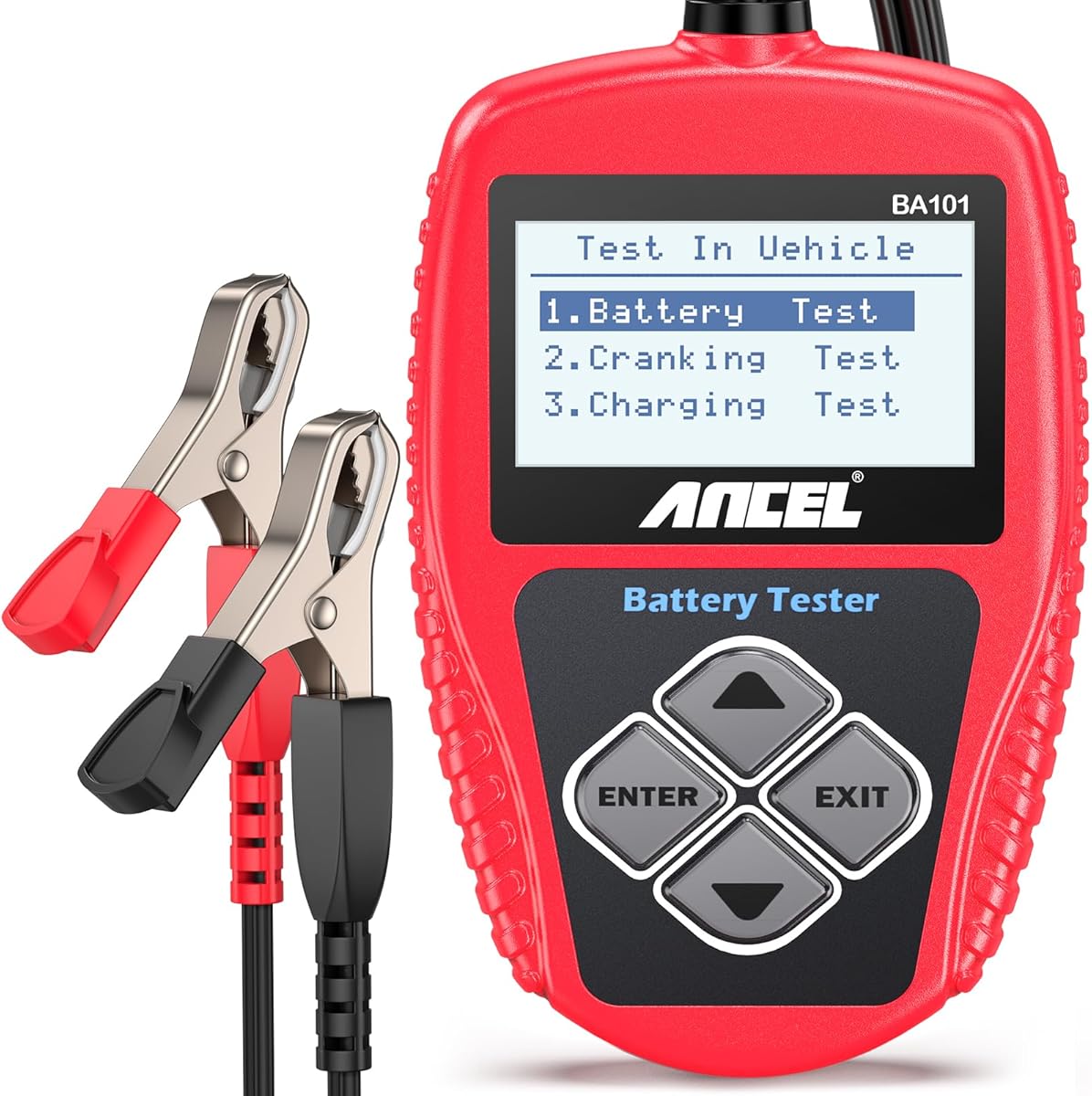
ANCEL BA101
4.5Editor score
Affordable price point for users
Clear backlight screen display
Multi-language support options
This guide compares the best lithium ion battery tester models for 2026, analyzing accuracy features, and compatibility to help you choose the right tool.
Finding a reliable lithium ion battery tester is essential for maintaining vehicle health and preventing unexpected breakdowns. These devices diagnose state of health charge charge, and internal resistance quickly. Modern testers offer digital readouts and safety features to protect both the user and the battery during testing procedures.
We evaluated ten top-rated models based on accuracy, ease of use, and compatibility with various battery types. Our analysis includes professional-grade tools and budget-friendly options for DIY enthusiasts. Each product was reviewed for its ability to handle lead-acid and lithium-ion systems effectively in real-world scenarios.
Each pick highlights specific strengths like QR reporting, color displays, or specialized lithium support. Note that prices and availability can change frequently on retailer sites. Always verify the latest specifications and warranty details before making your final purchase decision for your vehicle maintenance needs.
4.5Editor score

4.5Editor score

4.5Editor score
This side-by-side comparison highlights key specifications for all ten tested models. Review the specs below to find the right balance of features and value for your specific vehicle needs.


The ANCEL BT410 stands out as a top performer for its dual voltage capability and lithium support. It earned a 4.5 rating from users for its reliability in automotive settings. The device offers comprehensive diagnostics including State of Health and internal resistance checks.
We may earn a commission when you buy through this link, at no additional cost to you.
This tester excels with its smart chip technology delivering over 99.9 percent accuracy. The color TFT screen ensures readability in bright sunlight or dark garages. Users appreciate the ability to generate QR reports for sharing with mechanics or keeping records.
While the price is higher than basic models the added features justify the cost. The long cables make access to hard-to-reach batteries much easier. Some users note it requires connection to the battery for power which limits standalone use.
Ideal for professionals and serious DIYers needing detailed health checks. This device prevents unnecessary replacements by accurately diagnosing system faults. It is a solid investment for anyone managing multiple vehicles or commercial fleets.
The device analyzes cranking voltage and charging system performance under real load conditions.
Short-circuit and reverse polarity protection guard against accidental connection mistakes.
We may earn a commission when you buy through this link, at no additional cost to you.
The ANCEL BA101 provides reliable 12V testing at an entry-level price. It holds a 4.5 rating for its straightforward operation and solid build quality. Featured in Project Farm videos it is trusted for avoiding unexpected battery failures.
We may earn a commission when you buy through this link, at no additional cost to you.
This model uses a precision smart chip and high-quality copper clips for accurate readings. The black and white screen with backlight works well in various lighting. It draws power from the vehicle battery requiring no internal charging.
The main limitation is the lack of lithium battery compatibility. Users needing 24V or advanced data may need an upgrade. However for basic car maintenance this unit delivers the core features needed effectively.
Perfect for homeowners or small shop owners on a budget. It helps avoid buying new batteries when recharging or replacing is possible. The durability and protection features ensure long-term use in typical environments.
Simple operation with direct power from the vehicle battery means no charging cycles needed.
Reinforced ABS housing and built-in protection guard against common testing errors.
We may earn a commission when you buy through this link, at no additional cost to you.
This module is designed specifically for 18650 lithium cells used in DIY electronics. It has a 4.3 rating for its ability to test capacity and resistance quickly. It allows for simultaneous discharge and charge testing of multiple batteries.
We may earn a commission when you buy through this link, at no additional cost to you.
The Type-C port allows easy integration with modern power sources. The 1.77 inch screen displays internal resistance and voltage simultaneously. This helps users evaluate cell health before or after building battery packs.
The 10 percent measurement error is higher than professional lab tools. Users should calibrate or verify with a multimeter for critical applications. The integration of charge and discharge saves time during replacement workflows.
Best for hobbyists working with custom battery packs or flashlights. It provides essential data without needing complex equipment. Ensure you consult the manual for accurate setup to avoid connection errors.
Supports four channels for capacity and internal resistance measurement simultaneously.
The integration of charge and discharge saves tedious disassembly when replacing batteries.
We may earn a commission when you buy through this link, at no additional cost to you.
The ANCEL BT310 offers a balanced mix of features at a mid-range price. With a 4.5 rating it is praised for its data review function that tracks battery health over time. It supports 12V and 24V systems including lithium-ion options.
We may earn a commission when you buy through this link, at no additional cost to you.
This unit features 99.98 percent testing accuracy using a precision smart chip. The backlit LCD makes 5-way battery results clear even in low light. The Review Data function allows comparison of past test reports easily.
It does not have a color display like higher-end models. The cables may tangle if not stored carefully in the case. However the protection against reverse polarity and short circuits is robust for daily use.
Recommended for vehicle owners wanting to monitor trends over months. It helps identify weakening batteries before they fail completely. The warranty and durable construction make it a reliable tool for any garage.
The Review Data function lets you retrieve previous test reports for comparison over time.
The BT310 provides 4-way protection against reverse polarity and overvoltage.
We may earn a commission when you buy through this link, at no additional cost to you.
The TOPDON BT100 is a compact unit designed for easy storage in a glove box. It holds a 4.6 rating for its quick and precise results. It uses a passive testing approach that powers on only when properly attached to the battery.
We may earn a commission when you buy through this link, at no additional cost to you.
Three LED colors quickly show battery health status without complex menus. The menu system remains simple enough for beginners to navigate. It works on cars trucks RVs and golf carts without requiring a separate charge.
It lacks memory to store past test results for trend tracking. The unit is strictly for 12V systems which limits commercial truck use. However the spark-proof clamps add significant safety during connection.
Ideal for casual car owners who need occasional checks. It fits easily in a car trunk for roadside emergencies. The reliability and portability make it a great backup tool for any vehicle.
Safe passive testing approach powers on only when properly attached to the battery.
Three different colors of LEDs help you rapidly determine the health of the battery.
We may earn a commission when you buy through this link, at no additional cost to you.
The RC Cellmeter 7 is a specialized tool for RC hobbyists. It holds a 4.7 rating for its accuracy in checking LiPo and NiMH cells. It is lightweight and fits in a pocket for on-the-field checks.
We may earn a commission when you buy through this link, at no additional cost to you.
It shows total and lowest cell voltages which helps identify weak cells early. It requires no internal power to operate making it always ready to use. The 2 to 7 cell range covers most hobby packs.
It does not discharge batteries to measure actual capacity. The screen text can be hard to read in bright sunlight. However for simple voltage checks it is highly effective and quick.
Best for remote control vehicle owners and drone pilots. It helps prevent crashes by checking battery health before every flight. The simplicity ensures you can check packs quickly before use.
Applies to check the batteries simply and conveniently for reading your cell voltage.
Shows cell voltages total voltages lowest highest and voltage gap between cells.
We may earn a commission when you buy through this link, at no additional cost to you.
The FOXWELL BT705 is used in professional Project Farm comparisons for its precision. It has a 4.5 rating for its ability to verify battery health before installation. It is designed for 12V and 24V automotive fleets.
We may earn a commission when you buy through this link, at no additional cost to you.
The 5.9 ft test cable allows you to view results while sitting in the driver's seat. Step-by-step prompts on the 2.8-inch screen guide you through tests without confusion. A hard case protects the unit and accessories during transport.
It is bulky compared to simple handheld units which makes storage harder. The price is higher than basic testers but the build quality justifies it. Users appreciate the durability for repeated commercial shop use.
Ideal for professional mechanics or fleet managers. The consistent results help avoid replacing good batteries unnecessarily. The brand's long history in automotive testing adds reliability to its reputation.
The 5.9 ft test cable reaches from the battery to the driver's seat.
Features a protective housing and included hard carrying case for repeated use.
We may earn a commission when you buy through this link, at no additional cost to you.
The FOXWELL BT705Plus upgrades the classic model with a faster processor. It has a 4.5 rating for delivering results up to 30 percent faster. The color LCD ensures crisp visibility indoors or outdoors for clear diagnostics.
We may earn a commission when you buy through this link, at no additional cost to you.
This device includes advanced algorithms for accurate readings on low-voltage batteries. It performs three core tests battery cranking and charging in any sequence. The high-conductivity clamps help ensure professional-grade results every time.
While it does not support lithium batteries it covers lead-acid systems thoroughly. It is expensive which requires a specific use case to justify the cost. The storage box ensures accessories stay organized for shop use.
Best for shops needing speed and accuracy for high-volume testing. It reduces wait time and improves workflow efficiency. The GRS certification adds confidence in its manufacturing standards.
Delivering results up to 30 percent faster with a more powerful processor.
A high-contrast 2.8 inch color LCD ensures crisp visibility indoors or outdoors.
We may earn a commission when you buy through this link, at no additional cost to you.
The Dlyfull DB1 is a universal tester for household batteries. It holds a 4.5 rating for its versatility across various sizes like AA and 9V. It includes a magnetic slot to secure batteries during testing easily.
We may earn a commission when you buy through this link, at no additional cost to you.
It charges via USB-C and lasts up to 15 hours on a full charge. The digital display shows voltage and health status clearly. The one-touch operation cycle through battery types efficiently for quick checks.
It is not designed for automotive 12V batteries but works well for flashlights. Users need to slide the magnetic slider which adds a small manual step. The 18-month warranty adds value to this household tool.
Ideal for households with many household devices. It helps avoid buying fresh batteries when old ones still have charge. Its portability makes it easy to store in a desk drawer.
The magnetic slider secures the battery firmly to avoid slipping during tests.
Rechargeable household battery tester with USB-C input for long battery life.
We may earn a commission when you buy through this link, at no additional cost to you.
The La Crosse 911 is a simple portable tester for common battery sizes. It holds a 4.6 rating for its straightforward three-step operation. It works on both alkaline and rechargeable batteries without requiring its own power.
We may earn a commission when you buy through this link, at no additional cost to you.
Users select a voltage range and slide a tray to insert the battery. The LED display shows strength levels rather than detailed digital numbers. It includes touch contacts for 9V batteries for versatile use.
It does not provide detailed voltage readings which limits precise diagnostics. It is purely mechanical so it may wear out faster than electronic models. However it is incredibly easy to use for quick checks.
Best for elderly users or those preferring analog tools. It avoids complex menus and requires no internal battery management. The compact size makes it ideal for drawers or workbenches.
Simple operation in 3 easy steps for testing various battery types.
Works for AAA AA C D N 9V and lithium ion button cells.
We may earn a commission when you buy through this link, at no additional cost to you.
Selecting the right battery tester requires understanding your specific vehicle and testing needs. This guide breaks down the key factors to consider before making a purchase decision.
Check if the device supports your vehicle's battery chemistry. Many automotive testers only handle lead-acid batteries like AGM or flooded. If you own a modern car with lithium-ion systems ensure the model explicitly states lithium support.
Always verify compatibility before purchase to avoid wasting money on a tool that cannot read your battery data.
Ensure the tester matches your vehicle's electrical system. Most passenger cars use 12V systems but heavy trucks or vans may require 24V. Using a 12V-only tester on a 24V system will yield incorrect results or damage the device.
For versatile use across different vehicles choose a dual voltage 12V and 24V compatible model.
Accuracy is critical for diagnosing whether a battery needs replacement. High-end testers often advertise over 99 percent accuracy which helps avoid unnecessary costs. Look for models with precision smart chips for consistent and reliable data.
Prioritize accuracy to ensure you do not replace a healthy battery unnecessarily.
A clear display is essential for reading results in all lighting conditions. Color TFT screens offer better visibility than basic black and white LCDs. Backlit screens are helpful for testing in dim garages at night.
Select a display type that ensures you can read data easily in your working environment.
Some testers allow you to save past test results for future comparison. This feature helps track battery degradation over time. If you manage multiple vehicles a review function makes monitoring health simpler and more efficient.
Choose a model with memory functions if you plan to track battery performance trends.
Protecting yourself and your vehicle is a priority during testing. Look for built-in protections against reverse polarity and short circuits. Some models include insulated clamps or spark-proof features to prevent damage.
Always prioritize safety features to protect your vehicle's electrical system during use.
The length of the test cables determines how easily you can reach the battery. Short cables can make testing difficult in large vehicles like trucks or RVs. Longer cables allow you to view results from the driver's seat safely.
Consider cable length to ensure comfortable and safe testing in your specific vehicle.
Simple interfaces reduce the learning curve for non-experts. Models with one-handed operation or menu guidance are better for DIY users. Avoid complex tools unless you need professional-level data analysis regularly.
Pick a device with an interface that matches your technical skill and comfort.
Always start by reading the manual to select the correct battery type and rating. Enter the values exactly as shown on your battery label to ensure accurate results. Ensure the vehicle is turned off during initial connection to avoid electrical spikes.
Connect the clamps securely to the positive and negative terminals. Most testers will automatically power on when connected to the battery. Follow the on-screen prompts to run health cranking or charging tests as needed.
Store the device in a dry and cool place to maintain its accuracy. Keep the clamps clean from corrosion to ensure good contact. Remove the device after testing to prevent accidental short circuits in your vehicle.
Not all automotive testers support lithium-ion batteries. You must check the manufacturer specifications to confirm compatibility. Using a lead-acid only tester on lithium may damage the device or give incorrect readings. Look for a model that explicitly lists lithium support.
State of Health indicates the overall condition of the battery compared to when it was new. It is a percentage value that helps you decide if the battery can still hold a charge. A low SOH means the battery is aging and may need replacement soon.
A good battery result only means the battery is healthy. The issue might lie with the starter motor or the alternator. Advanced testers can check cranking voltage and charging systems to isolate these problems. Always run a full system test.
Most automotive testers draw power directly from the battery being tested. This means they do not need internal batteries to operate. However always check the manual as some digital models may require a separate power source for advanced features.
It is recommended to test your battery at least once a year. Testing before winter is especially important as cold weather reduces battery performance. Regular testing helps you catch issues before they leave you stranded unexpectedly.
CCA measures cold cranking amps which is the power available to start an engine in cold weather. Ah measures amp-hours which indicates capacity over time. Most automotive testers require you to enter the CCA rating for accurate diagnosis.
We found that the ANCEL BT410 leads our list with its dual voltage support and lithium compatibility. It offers a balance of features and accuracy that fits most automotive needs. For budget-conscious buyers the ANCEL BA101 provides essential 12V testing at a lower cost.
When choosing prioritize accuracy and compatibility to ensure the tool works for your specific vehicle. Advanced features like QR reporting and data review add long-term value for frequent users. Always match the tester's capabilities to your maintenance routine and vehicle types.
Prices for these tools vary by retailer and availability. We recommend checking current listings and warranty details before purchasing. A reliable battery tester is an investment that can save you significant money on unnecessary repairs.