
Apera Instruments AI480 DO850 Optical Kit
4.8Editor score
Optical sensor technology
Minimal maintenance needed
IP67 waterproof structure
This guide compares the top dissolved oxygen sensors for aquaculture, labs, and ponds. We review accuracy, ease of use, and durability to help you choose the
Choosing the right dissolved oxygen sensor is critical for maintaining healthy aquatic environments and ensuring accurate water quality data. Whether you manage an aquaculture farm, conduct laboratory research, or monitor a home pond, the right tool provides reliable insights into oxygen levels essential for life.
We evaluated ten leading models based on performance, durability, calibration ease, and compatibility with different systems. Our comparison covers galvanic, optical, and polarographic technologies to help you find a sensor that fits your specific monitoring needs without unnecessary complexity or cost.
Each pick highlights key strengths and ideal use cases so you can make an informed decision quickly. Keep in mind that availability and specifications may vary over time, so verify the latest details before purchasing to ensure the device meets your current requirements.
4.8Editor score
4.4Editor score

4.3Editor score
The following table offers a side-by-side overview of key specifications for each model. This helps you quickly identify which sensor aligns with your monitoring requirements, interface needs, and application environment.



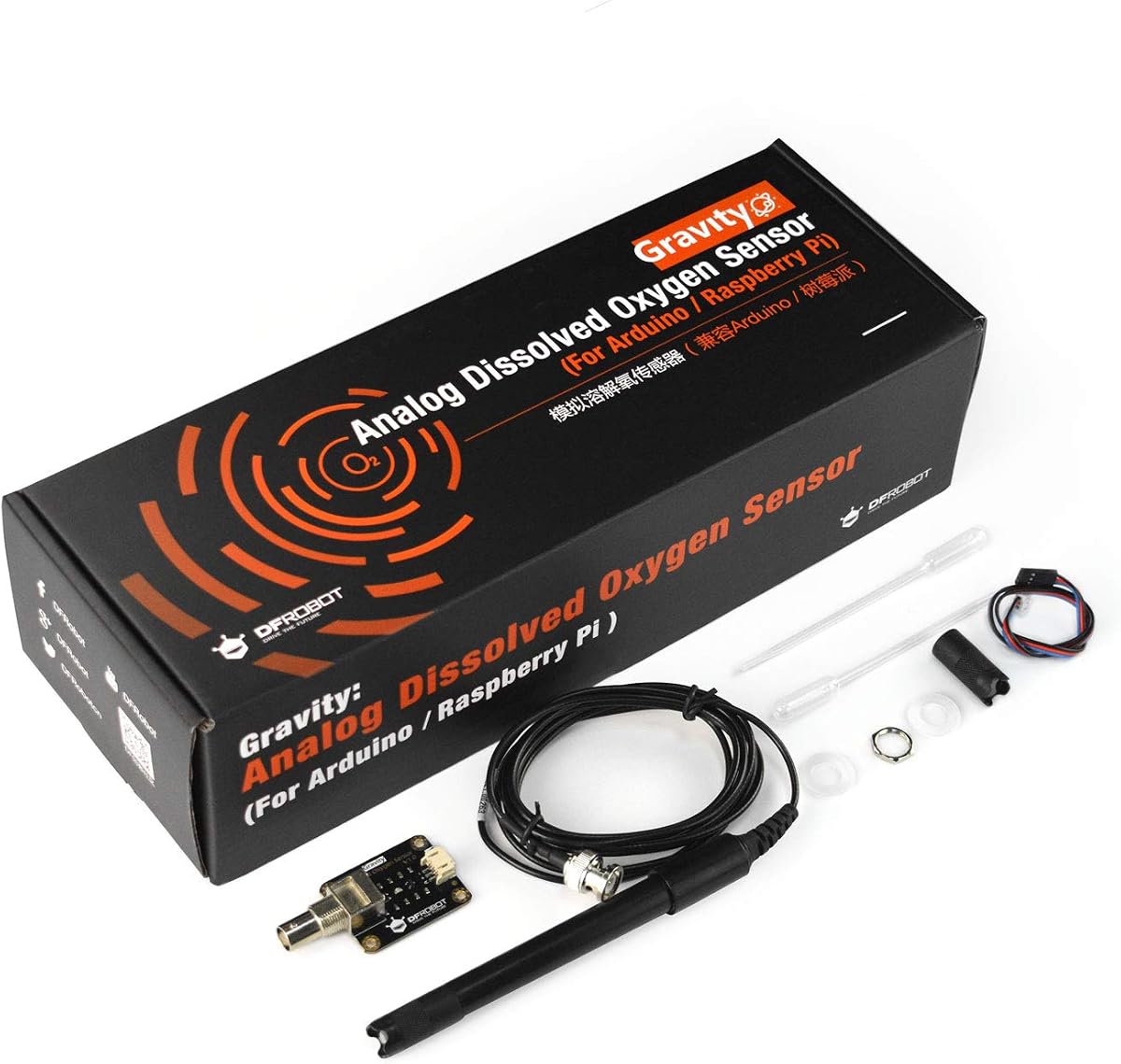
This Gravity sensor kit stands out for makers needing a reliable dissolved oxygen sensor without complex setup. It receives a solid 4.4 rating from users who appreciate the instant measurement capability thanks to the galvanic probe technology.
We may earn a commission when you buy through this link, at no additional cost to you.
The hardware filtering ensures stable analog signals, making integration with microcontrollers like Arduino and ESP32 straightforward. The inclusion of a spare membrane cap and detailed documentation supports long-term projects without frequent costly replacements.
While the filling solution must be sourced separately due to shipping restrictions, this is a minor hurdle for most lab or hobbyist environments. The need for an external ADC on Raspberry Pi adds a small complexity step but offers flexibility.
Buy this if you are building custom water quality monitoring systems for aquaculture or research. It balances cost, performance, and ease of integration better than many competitor kits in this space.
The galvanic probe allows you to take readings immediately without waiting for warm-up, ideal for intermittent power systems.
Documentation includes algorithms for calibration and temperature compensation, helping you achieve high precision without proprietary software.
We may earn a commission when you buy through this link, at no additional cost to you.
This YSI sensor is a top choice for professionals requiring a durable dissolved oxygen solution that minimizes downtime. With a 4.8 rating, users consistently praise the ease of sensor replacement without tools.
We may earn a commission when you buy through this link, at no additional cost to you.
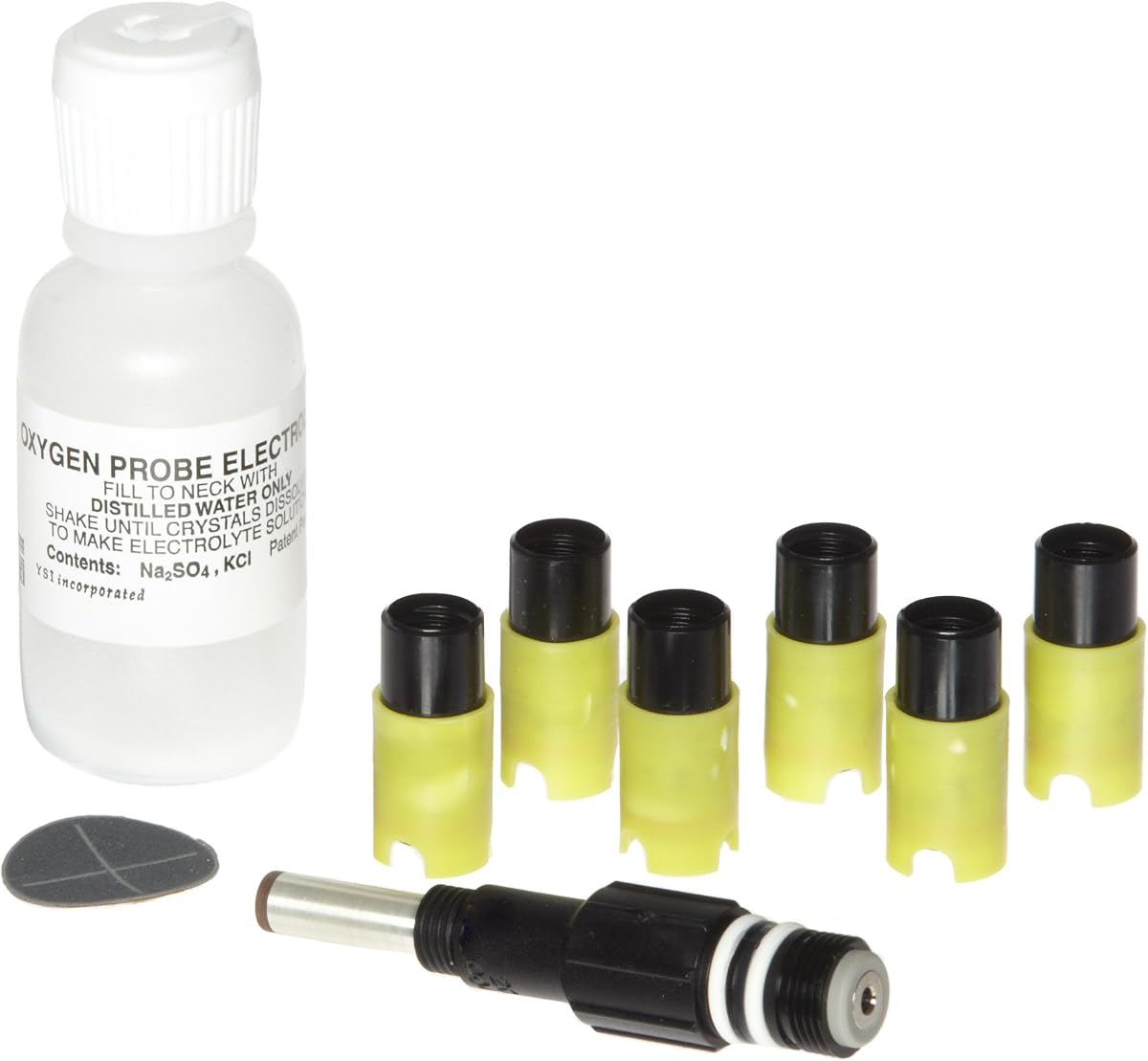
The screw-on cap membranes simplify maintenance significantly, allowing quick swaps during field work or lab routines. The kit comes with enough caps and solution to keep operations running smoothly for a considerable period.
While the sensor itself is reliable, ongoing consumable costs can accumulate over time compared to optical options. However, the ease of use and robust construction make it a favorite for many aquaculture operations.
Choose this if you need a proven, easy-to-maintain sensor for regular monitoring tasks. It offers a great balance of simplicity and performance for general water quality checks.
The design allows users to swap the sensor quickly without specialized tools, reducing downtime during critical monitoring periods.
Packaging includes multiple membrane caps and a bottle of solution, ensuring you are ready to use it immediately upon arrival.
We may earn a commission when you buy through this link, at no additional cost to you.
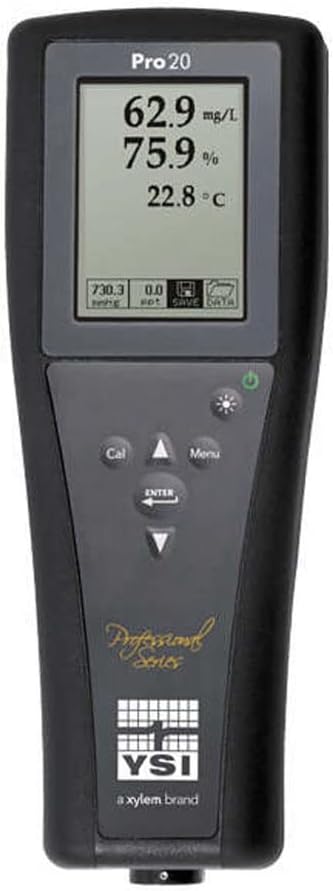
The Pro20 Handheld Meter is designed for field professionals who need to record data without writing it down manually. Its 4.4 rating reflects reliability in demanding environments like lakes or industrial sites.
We may earn a commission when you buy through this link, at no additional cost to you.
The One Touch Cal feature allows rapid calibration in just seconds, saving time during routine checks. The device stores up to 50 data sets and features a backlit display for visibility in low light.
While it is sold as a meter only, the accuracy and storage features justify the investment for serious monitoring. Barometric pressure compensation ensures readings remain accurate regardless of altitude or weather changes.
Select this if you need a portable, log-capable device for field research or environmental surveys. It eliminates the need for separate clipboards and reduces transcription errors.
With a simple button press, the meter calibrates in seconds, keeping your workflow efficient during multiple daily tests.
The ability to store 50 data sets ensures you can retrieve historical readings later without external storage devices.
We may earn a commission when you buy through this link, at no additional cost to you.
This optical sensor is built for integration with the YSI ProDSS multiparameter system, offering exceptional performance for research and industrial applications. Its optical technology reduces maintenance needs significantly compared to electrochemical probes.
We may earn a commission when you buy through this link, at no additional cost to you.
The design ensures stable readings even in challenging conditions where fouling or drift might affect traditional sensors. Users value the consistency and reliability it brings to long-term monitoring programs.
While it requires a compatible host device and represents a significant investment, the performance justifies the cost for professional settings. It is part of a broader ecosystem that supports detailed water analysis.
Choose this if you are building or expanding a high-end monitoring station with YSI equipment. It provides the accuracy and robustness needed for rigorous scientific or regulatory work.
Optical sensors do not require electrolyte refills or membrane changes as frequently, lowering long-term operational effort.
This sensor works seamlessly with the ProDSS handheld for multi-parameter testing, streamlining complex field investigations.
We may earn a commission when you buy through this link, at no additional cost to you.
This meter offers an impressive range and feature set for its price, making it a strong contender for hobbyists and small farms. With a 4.3 rating, users appreciate the included calibration materials and automatic temperature compensation.
We may earn a commission when you buy through this link, at no additional cost to you.
The extended range of 0 to 40 mg/L allows monitoring of extreme conditions where standard meters might fail. The package includes anaerobic water powder and fluid, so you can calibrate right out of the box.
While it lacks a backlight, the clear digital display remains legible in most lighting conditions. Auto power-off helps conserve battery life during less frequent use, adding to its practicality.
Pick this if you want a complete package without a high cost. It is perfect for aquariums, small ponds, or general water quality checks where budget is a primary concern.
The meter supports measurements up to 40 mg/L, covering scenarios where high oxygen levels or specific industrial needs arise.
Accessories like calibration powder and fluid are included, removing the need to buy additional chemicals immediately after purchase.
We may earn a commission when you buy through this link, at no additional cost to you.
Designed specifically for pond and aquarium monitoring, this kit provides a straightforward way to check dissolved oxygen levels for aquatic life. Users note the convenience of the included membranes and calibration solutions.
We may earn a commission when you buy through this link, at no additional cost to you.
The cable length allows you to reach deeper areas in tanks or ponds easily. Display units in both mg/L and percentage saturation offer flexibility depending on your preferred monitoring method.
While some users report variability in accuracy, it remains a popular choice for casual hobbyists due to its affordability and features. The backlit display aids in reading results during evening checks.
Consider this if you keep fish in ponds or aquariums and need a simple tool for routine checks. It helps ensure your aquatic pets have adequate oxygen levels to thrive.
The 3.6-foot cable allows you to submerge the sensor deep into water bodies without straining or leaning over tanks.
Switch between mg/L and percentage saturation to match the reporting standards used in your local fish keeping community.
We may earn a commission when you buy through this link, at no additional cost to you.
This meter extends its utility with a long cable and multiple parameter measurements, appealing to those needing detailed water analysis. The 4.0 rating reflects its utility in educational and industrial settings.
We may earn a commission when you buy through this link, at no additional cost to you.
The cable length lets you test deep water without lowering the whole unit, which is useful for large tanks or ponds. It stores 99 data points and measures salinity and barometric pressure for comprehensive checks.
While the IRDA port is a nice feature for data transfer, it may not be necessary for casual users. The stability indicator ensures you wait for a reliable reading before recording, reducing errors.
Choose this if you need long-reach testing and additional data points like salinity. It is a versatile tool for users who value detailed logging and connectivity.
An 11.48-foot cable allows sampling at significant depths, making it ideal for large aquaculture tanks or ponds.
With 99 memory slots, you can log extensive data sets for later review or analysis without losing important readings.
We may earn a commission when you buy through this link, at no additional cost to you.
The Milwaukee MW600 is a trusted tool in educational and aquaculture settings for its reliable performance and sturdy build. Users give it a 4.2 rating for consistent results and clear LCD readouts.
We may earn a commission when you buy through this link, at no additional cost to you.
Its 0.1 mg/L resolution ensures precise measurements, which is crucial for sensitive biological environments. The probe features a screw-on cap that simplifies maintenance and replacement in busy classrooms or labs.
While it uses manual calibration, this offers students or operators better control over the process. The device covers the standard saturation range effectively, meeting most basic water analysis requirements.
Select this for classrooms or labs needing robust equipment that teaches calibration basics. It is reliable enough for routine checks yet affordable for educational budgets.
A resolution of 0.1 mg/L allows detecting small changes in oxygen levels, helpful for monitoring sensitive aquatic life.
The manual calibration process helps users understand the importance of proper sensor preparation in water quality monitoring.
We may earn a commission when you buy through this link, at no additional cost to you.
This optical kit represents a premium choice for those seeking minimal maintenance and high accuracy. With a 4.8 rating, users praise the optical sensor's durability and ease of use in demanding environments.
We may earn a commission when you buy through this link, at no additional cost to you.
The probe does not require solution refills or frequent membrane changes, saving time and effort. The IP67 waterproof rating ensures protection against splashes or immersion, making it suitable for outdoor fieldwork.
Calibration is straightforward with auto functions for saturated air and zero-oxygen, reducing setup time. The rugged carrying case adds value by protecting the device during transport to remote sites.
Invest in this if you want a top-tier sensor that minimizes ongoing maintenance. It is ideal for professionals who need reliability and speed in their daily monitoring tasks.
Optical sensors eliminate the need for electrolyte refills and frequent membrane changes, streamlining routine testing protocols.
IP67 waterproof rating ensures the device survives exposure to water and dust, perfect for harsh outdoor or industrial conditions.
We may earn a commission when you buy through this link, at no additional cost to you.
This polarographic sensor serves as a reliable replacement or addition for lab setups using YSI equipment. Its 4.6 rating highlights its consistent performance in controlled testing environments.
We may earn a commission when you buy through this link, at no additional cost to you.
The design is lightweight and compact, fitting easily into standard lab inventory. It provides accurate readings essential for research or quality control processes where data integrity is paramount.
While the product details are minimal, users trust the Pro Series lineage for accuracy. It is important to ensure your meter supports polarographic sensors before purchasing.
Choose this for lab supplies where precision and brand reliability matter. It complements existing YSI infrastructure and supports high standards for scientific testing.
Polarographic sensors are well-established in lab environments for their accuracy in detecting oxygen levels over time.
Being part of the Pro Series ensures consistent quality and performance standards trusted by professionals globally.
We may earn a commission when you buy through this link, at no additional cost to you.
Selecting the right dissolved oxygen sensor depends on your specific application, budget, and technical requirements. This guide outlines key factors to consider for informed decision making.
Sensors generally fall into galvanic, polarographic, or optical categories. Galvanic and polarographic require electrolytes and membranes, while optical sensors use light to measure oxygen and need less maintenance.
Optical sensors are ideal for high maintenance avoidance, whereas galvanic suits intermittent power or IoT setups.
Check the sensor's measurement range to ensure it covers your expected values. Most sensors range from 0 to 20 mg/L, but some extend to 40 mg/L or higher for specialized applications.
If you work with extreme environments, verify the upper limit meets your needs to avoid sensor saturation.
Ease of calibration affects usability. Look for one-touch or automatic calibration options if you need speed, or manual options if you require full control over the process.
Some kits include calibration solutions, which saves time and ensures accurate setup from the start.
Field work often requires recording data without paper. Sensors with memory storage let you keep track of readings for later analysis, reducing transcription errors.
Consider if you need connectivity options like IRDA or USB to transfer data to a computer or cloud system.
Environmental conditions matter for longevity. Look for waterproof ratings like IP67 if you work outdoors or in splash-prone areas to protect the electronics.
Robust casing and rugged cases help prevent damage during transport to remote or hazardous locations.
Deep water or large tanks require longer cables to submerge the probe safely. Standard meters have short cables, while others offer extensions up to 11 feet or more.
Portable handhelds are better for travel, while stationary kits suit fixed monitoring points.
Consider long-term costs of membranes, electrolytes, and replacement parts. Some sensors need frequent cap changes, while optical ones have minimal consumable needs.
If you prefer low overhead, choose models that include spare caps or have long sensor lifespans.
If you integrate with existing setups like Arduino, ESP32, or YSI systems, ensure the sensor output matches your hardware inputs.
Check voltage requirements and interfaces like analog or digital to guarantee seamless integration.
Start by calibrating the sensor according to the manual. Use fresh calibration solutions and ensure the environment matches the recommended temperature for accurate settings.
Immerse the probe gently into the water sample, avoiding air bubbles that could interfere with readings. Wait for the reading to stabilize before recording any values.
After use, rinse the probe with clean water and store it as instructed. Keep membranes moist if required, and replace electrolytes periodically to maintain performance.
Lifespan varies by technology and usage. Galvanic and polarographic sensors often last a year or more with regular maintenance. Optical sensors can last longer due to fewer consumables. Proper care extends life significantly.
Yes, regular calibration ensures accuracy. Most meters require calibration before each use or weekly. Optical sensors may need it less often but still need verification to maintain precision.
Many modern sensors support salinity compensation. Always check the spec for salinity range before use. Adjust settings accordingly to avoid errors caused by different water densities.
Temperature, altitude, salinity, and water movement all influence levels. Use sensors with automatic compensation for these factors to get reliable results under changing conditions.
Optical sensors usually require less maintenance but can cost more upfront. Galvanic sensors are affordable and reliable for intermittent use. The choice depends on your specific needs.
Store the probe with its cap on and keep it moist if required. Avoid letting it dry out completely. Follow manufacturer guidelines to prevent damage to the sensor tip.
We covered ten excellent options ranging from budget kits to premium optical models. Each serves distinct needs whether for IoT projects, lab research, or pond management.
Prioritize the features that align with your usage frequency and technical comfort. Ease of calibration and durability are often the most critical factors for satisfaction.
Always check the latest details and availability before finalizing a purchase to ensure the sensor meets your current standards and requirements.