
SIRUI Night Walker 35mm T1.2
4.4Editor score
Affordable price point
T1.2 low light
S35 coverage frame
This guide compares the top cine lenses for filmmakers in 2026, evaluating optical performance, build quality, and mount compatibility to help you choose the
Choosing the right cine lens transforms your footage from amateur to professional instantly. These lenses offer smooth focus ramps consistent color profiles and reliable mechanical build quality designed for video production workflows.
We evaluated ten top models based on optical sharpness aperture consistency and mounting versatility. Each product was assessed for low light performance build durability and compatibility with popular camera systems used by independent creators.
Every pick includes detailed specs pros cons and real world usage notes. Prices fluctuate frequently so check current listings before buying to ensure you get the best value for your specific filmmaking needs and budget.
4.4Editor score
5.0Editor score

5.0Editor score
The following table compares all ten selected cine lenses side by side. Review key specifications like aperture range focal length and mount type to find the perfect match for your camera system.


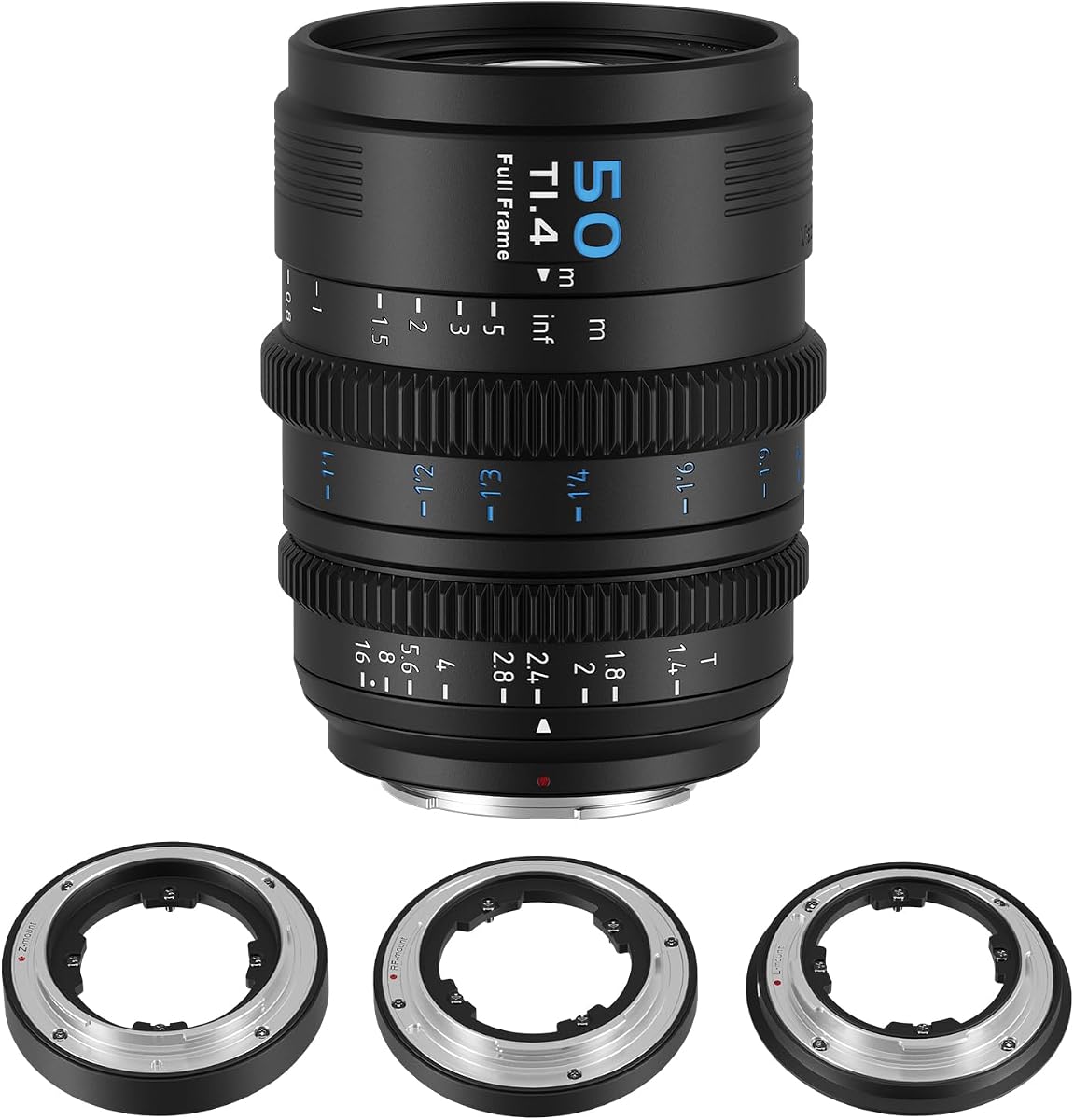


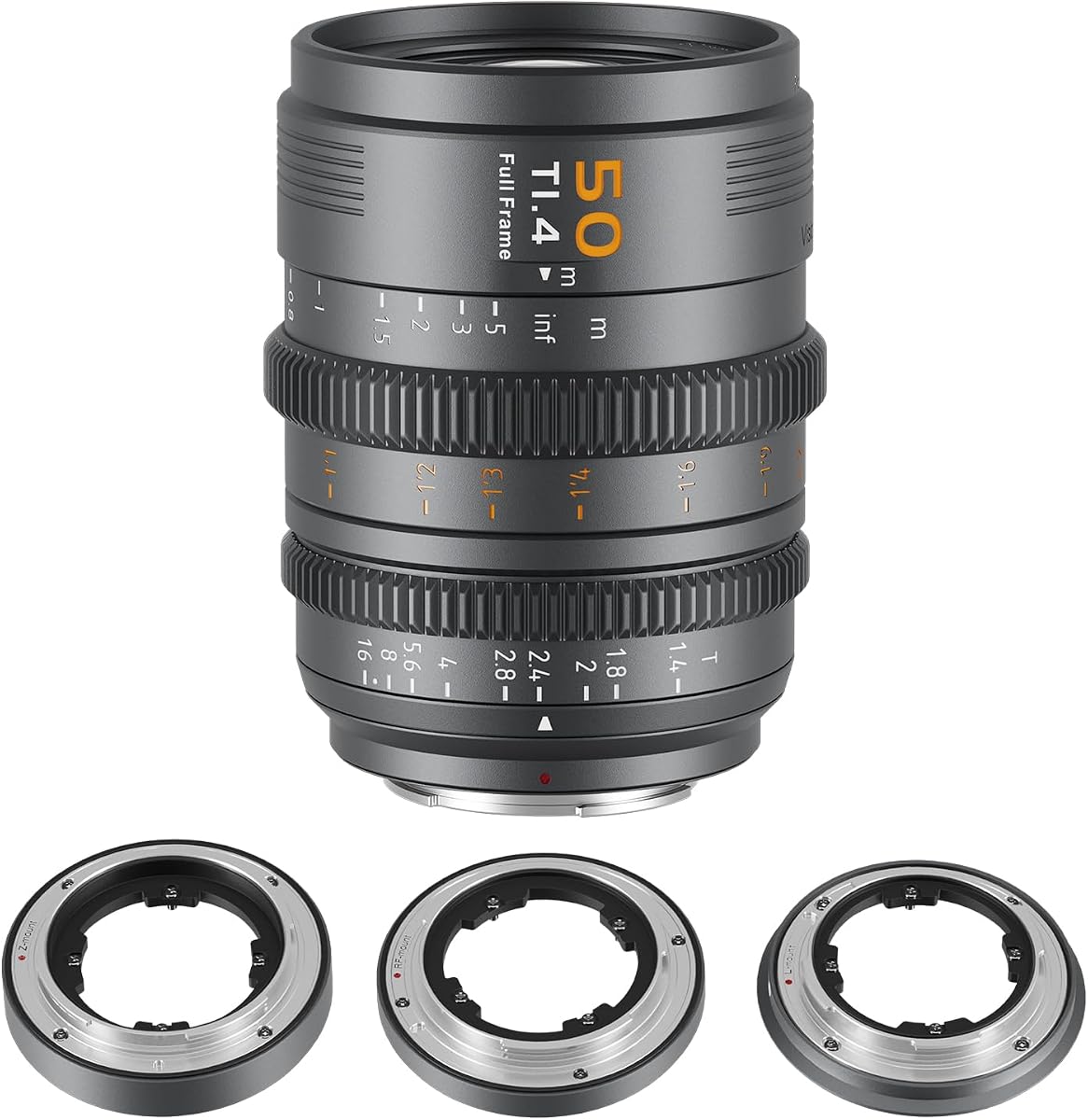
The SIRUI VP-1 Vision Prime 1 50mm T1.4 stands out as the top choice for filmmakers seeking high quality optics without breaking the bank. With a perfect 5.0 rating this lens delivers edge to edge sharpness and smooth bokeh that rivals far more expensive competitors.
We may earn a commission when you buy through this link, at no additional cost to you.
Its standout feature is the interchangeable mount system allowing you to switch between E RF Z and L mounts effortlessly. This versatility ensures your investment remains compatible as you upgrade camera bodies. The T1.4 aperture provides exceptional low light performance while maintaining beautiful subject separation.
While it lacks autofocus and is limited to prime focal lengths these trade-offs are standard for true cine lenses. The manual focus ring offers precise control which is essential for professional video work. The compact aluminum body makes it ideal for gimbal and handheld shooting.
This lens is perfect for indie filmmakers documentarians and content creators who value optical quality and flexibility. If you need a reliable 50mm prime that performs brilliantly across multiple camera systems this is the clear winner in our lineup.
The user interchangeable mount system allows seamless transitions between Sony Canon Nikon and Panasonic cameras without buying new lenses.
Engineered for 8K storytelling this lens uses aspherical and ED glass to minimize aberrations and deliver crystal clear images.
We may earn a commission when you buy through this link, at no additional cost to you.
The SIRUI Night Walker 35mm T1.2 offers incredible value for budget conscious filmmakers needing a fast prime lens. Rated 4.4 stars it delivers outstanding optical performance with a bright T1.2 aperture that shines in challenging lighting conditions.
We may earn a commission when you buy through this link, at no additional cost to you.
Its T1.2 aperture allows shooting at night or indoors without pushing ISO to noisy levels. The 35mm focal length equivalent to 49mm on full frame is perfect for documentaries portraits and street scenes. The lens construction is robust yet weighs only around 500 grams.
While it is designed for S35 sensors limiting full frame use the optical quality compensates well. Focus breathing is minimal which is crucial for video. The build quality feels premium despite the lower price point making it a steal for entry level creators.
Ideal for YouTubers indie docs and students this lens provides professional results at a fraction of the cost. If your camera is E mount and you need a versatile 35mm prime this is the best budget option available.
The T1.2 aperture lets you capture pure low noise scenes in dark environments without needing extra lighting setups.
Advanced coatings ensure high sharpness and controlled aberrations even when shooting wide open at maximum aperture.
We may earn a commission when you buy through this link, at no additional cost to you.
The DZOFILM Pictor 50-125mm T2.8 represents the pinnacle of zoom cine lens performance in our list. With a perfect 5.0 rating this lens is engineered for professional productions requiring reliable optical consistency across its entire zoom range.
We may earn a commission when you buy through this link, at no additional cost to you.
Its parfocal design ensures focus stays locked while zooming a critical feature for documentary and event work. The constant T2.8 aperture maintains exposure consistency and the 16 slat iris creates smooth circular bokeh. The build feels solid and compatible with standard cine accessories.
The main drawbacks are the price and size which may not suit handheld gimbal setups. However for tripod or dolly work the optical stability is unmatched. This lens bridges the gap between prime clarity and zoom versatility.
Professional videographers and production houses will appreciate the reliability and image quality. If you need a high end zoom that performs like a prime this is the ultimate choice for serious filmmaking projects.
Maintains focus across the entire zoom range allowing smooth transitions without losing sharpness on your subject.
Compatible with standard cine accessories and built to withstand rigorous use on set with minimal maintenance.
We may earn a commission when you buy through this link, at no additional cost to you.
The Rokinon Cine DS 85mm is a classic choice for portrait and interview work. Rated 4.5 stars this lens delivers beautiful subject separation and sharp focus where it matters. The 85mm focal length provides ideal compression for flattering headshots.
We may earn a commission when you buy through this link, at no additional cost to you.
Its T1.5 aperture allows for shallow depth of field while maintaining enough sharpness for cinematic shots. The DS line ensures color matching and gear alignment with other Rokinon lenses making kit building easier. The 8 blade iris creates pleasing circular highlights in out of focus areas.
While it is limited to Canon EF cameras the optical quality is impressive for the price. The minimum focus distance of 3.6 feet is sufficient for most portrait setups. The build quality feels sturdy and professional for daily use on set.
This lens is perfect for shooters using Canon EF bodies who need a dedicated portrait prime. If you want reliable bokeh and consistent color without spending a fortune this 85mm is a fantastic choice.
Unified gear and aperture positions across all Rokinon Cine DS lenses streamline workflow and accessory compatibility.
The 85mm focal length is the industry standard for flattering portraits and intimate storytelling shots.
We may earn a commission when you buy through this link, at no additional cost to you.
The ROKINON CINE DS Kit provides a complete arsenal for Canon EF shooters needing versatility. With a 4.9 rating this kit includes 24mm 35mm 50mm and 85mm lenses offering coverage for almost any scene. The lenses are color matched for seamless editing.
We may earn a commission when you buy through this link, at no additional cost to you.
All lenses share identical gear and aperture positions allowing quick swaps during production. The T1.5 max aperture ensures consistent exposure across all focal lengths. This consistency saves time on set and in post production making it ideal for professional workflows.
While limited to Canon EF and manual focus the convenience of a matched kit is hard to beat. The de clicked aperture rings provide precise control for exposure changes. The build quality is reliable and feels durable for field use.
This kit is perfect for production teams wanting a cohesive look without buying lenses individually. If you have a Canon EF body and need a full set of primes this offers the best value and workflow efficiency.
Unified gear positions allow you to swap lenses quickly without readjusting your follow focus rig.
Color matched lenses ensure consistent skin tones and exposure across different focal lengths in your footage.
We may earn a commission when you buy through this link, at no additional cost to you.
The Rokinon 35mm Cine DS is a versatile wide angle prime for Canon EF users. Rated 4.6 stars this lens offers a balanced field of view for both indoor and outdoor shooting. The T1.5 aperture allows for good low light performance.
We may earn a commission when you buy through this link, at no additional cost to you.
Its compatibility with the DS line ensures you can match it with other Rokinon lenses for consistent color. The 63.1 degree angle of view on full frame is ideal for environmental shots and street photography. The build is robust with unified gear positions.
While limited to manual focus and Canon EF the optical quality is strong for the price point. The minimum focus distance of 12 inches allows for some close up creativity. The filter thread size of 77mm is common and accessible.
This lens is perfect for shooters needing a reliable wide angle for interviews and landscapes. If you value consistency within the Rokinon ecosystem this 35mm is a great addition to your kit.
Color matched and gear unified with other DS lenses for seamless production workflows.
35mm offers a natural perspective for environmental storytelling and interior shots.
We may earn a commission when you buy through this link, at no additional cost to you.
The SIRUI Night Walker 24mm RF brings a bright wide angle option to Canon EOS R shooters. Rated 4.3 stars this lens excels in low light and environmental storytelling. The T1.2 aperture captures more light than most competitors in this range.
We may earn a commission when you buy through this link, at no additional cost to you.
The 24mm focal length provides a versatile wide view for landscapes and interiors. The RF mount ensures a secure connection and optimized performance on Canon cameras. Focus breathing is minimal thanks to advanced optical design for smooth manual pulls.
While it covers S35 only the 24mm still offers a wide perspective. The build is lightweight and sturdy enough for gimbal use. The close focus of 0.3m adds creative flexibility for detail shots.
This lens is perfect for Canon R users needing a versatile wide angle for documentary and street work. If you prioritize low light performance and wide framing this is an excellent value choice.
Optimized for Canon EOS R series cameras ensuring perfect electronic communication and physical fit.
24mm offers a broad field of view ideal for landscapes and immersive storytelling.
We may earn a commission when you buy through this link, at no additional cost to you.
The SIRUI Night Walker 24mm M4/3 offers outstanding performance for Micro Four Thirds shooters. With a 4.9 rating this lens is highly praised for its optical quality and value. The T1.2 aperture is a standout for low light filming.
We may earn a commission when you buy through this link, at no additional cost to you.
Designed for S35 coverage it pairs well with cameras like the GH6 and BMPCC4K. The compact 500g weight makes it ideal for gimbal and handheld setups. The 24mm focal length provides a wide view for environmental storytelling.
While the mount limits it to M4/3 the optical performance remains strong. The focus rotation allows precise control for video production. Build quality is robust yet lightweight for travel friendly kits.
This lens is perfect for M4/3 filmmakers needing a reliable wide angle prime. If you want high quality optics without a huge budget this is a top rated choice.
At only 500g it is easy to carry and stabilize on gimbal or handheld rigs.
The T1.2 aperture allows shooting in dark scenes without excessive ISO noise.
We may earn a commission when you buy through this link, at no additional cost to you.
The SIRUI VP-1 50mm E Mount variant brings versatile performance to Sony Alpha users. Rated 4.0 stars this lens shares the same high quality optics as the interchangeable version. The T1.4 aperture provides beautiful bokeh and low light capability.
We may earn a commission when you buy through this link, at no additional cost to you.
Designed with an interchangeable mount system you can upgrade to RF Z or L mounts later. This future proofs your investment as you switch camera bodies. The 600g weight is light enough for gimbal and travel use.
While the rating is slightly lower than the VP-1 it still delivers solid optical performance. The build quality is durable and consistent with the series. Color matching ensures seamless transitions if you add more lenses.
This lens is perfect for Sony shooters needing a versatile 50mm prime. If you value future expandability and consistent color this is a strong choice for your camera kit.
Start with E mount and swap later to RF or Z mount without buying a new lens.
Shares the same color matched optics across the VP-1 series for professional results.
We may earn a commission when you buy through this link, at no additional cost to you.
The Rokinon DSX 85mm is a strong telephoto prime for Canon EF users. Rated 4.7 stars this lens delivers sharp images and smooth bokeh for portraits. The T1.5 aperture ensures great low light performance and subject separation.
We may earn a commission when you buy through this link, at no additional cost to you.
The optical design features 9 elements in 7 groups with ultra multi-coated glass. This results in controlled aberrations and sharp focus. The 9 aperture blades create a circular shape for pleasing out of focus highlights.
While limited to Canon EF the optical quality stands out in its price range. The angle of view is ideal for headshots and detail shots. The build feels sturdy for daily use on set.
This lens is perfect for shooters needing a reliable 85mm for interviews and portraits. If you want high quality optics without paying premium prices this is a solid option.
Optically constructed with high speed glass for consistent sharpness across the aperture range.
85mm is the ideal focal length for portraits and isolated subjects in video.
We may earn a commission when you buy through this link, at no additional cost to you.
Selecting the right cine lens requires understanding your camera system workflow and creative needs. This guide breaks down key factors to consider before purchasing.
Ensure the lens mount matches your camera exactly to avoid adapter issues. Native mounts provide better communication stability and performance.
Full frame lenses work on both full frame and S35 sensors while S35 lenses may vignette on full frame. Choose based on your sensor size.
Wider apertures like T1.2 or T1.4 allow shooting in low light and create shallow depth of field. Consider your lighting conditions when choosing max aperture.
Prime lenses offer better optics and wider apertures while zooms provide versatility. Choose based on your shooting style and budget constraints.
Look for durable aluminum bodies and smooth focus gears. Weight matters for gimbal and handheld work so balance durability with portability.
Standardized gear positions allow easy integration with follow focus and matte boxes. Check lens specs for compatibility with your existing rig.
If buying a kit ensure lenses are color matched. Consistent skin tones and profiles save time in post production editing.
True cine lenses are manual focus for precise control. Autofocus is useful for run and gun but manual offers cinematic flexibility.
Always use a lens hood to protect glass and reduce flare in bright conditions. This preserves image contrast and prevents accidental scratches on the front element.
Clean glass regularly with a microfiber cloth and proper lens solution. Dust and fingerprints can reduce sharpness and cause unwanted flare during shoots.
Store lenses in a dry case with silica gel to prevent moisture damage. Extreme humidity can cause fungus growth on internal glass elements.
Cine lenses are optimized for video with smooth focus and aperture rings minimal focus breathing and consistent color profiles across multiple lenses. Still lenses often prioritize autofocus speed and compact size over mechanical control.
Only if the mount matches your camera body. Many lenses offer interchangeable mounts but you must buy the correct system. Check compatibility before purchasing to avoid adapter issues.
It requires practice but offers precise control essential for video. Using follow focus rigs with standard gear positions simplifies the process and ensures smooth focus pulls.
Higher priced lenses often offer better build quality sharper glass and tighter tolerances. For indie work budget models can deliver amazing results if chosen carefully.
Most true cine lenses are manual focus to prevent unwanted focus shifts during recording. Some hybrid lenses offer both modes but prioritize mechanical control.
Use a soft microfiber cloth and approved lens cleaning solution. Avoid touching the glass with fingers and store in a dry case to prevent scratches and fungus.
A parfocal lens stays in focus as you zoom. This is critical for video work where losing sharpness while changing focal lengths ruins the shot.
Yes cine lenses work on both photo and video. They may lack autofocus but offer excellent optical quality and manual control for creative shots.
Our top picks highlight the SIRUI VP-1 Vision Prime for versatility the Night Walker for budget value and the DZOFILM Pictor for professional zoom needs.
Prioritize mount compatibility and aperture needs over brand names to find the best tool for your specific projects and camera system.
Prices change often so check current listings before buying to ensure you get the best value for your filmmaking budget and requirements.