
ESP32-S3-Nano Microcontroller Development Board
5.0Editor score
Affordable ESP32-S3R8 Chip
Switch Between Arduino and MicroPython
Built-in 16MB Flash Memory
This guide compares the top Arduino Nano ESP32 boards and similar ESP32-S3 microcontrollers for Wi-Fi Bluetooth IoT, embedded, and educational projects.
The Arduino Nano ESP32 represents a significant leap forward in compact microcontroller design, blending the familiar Arduino ecosystem with the powerful ESP32-S3 chip. This combination offers developers and hobbyists unprecedented access to Wi-Fi, Bluetooth, and high-performance computing in a form factor that fits easily into wearable and space-constrained projects. Choosing the right board means balancing processing power, connectivity features, and ease of use for your specific application needs.
Our team evaluated ten leading boards based on processor architecture, wireless capabilities, memory resources, and community support. We analyzed technical specifications, developer feedback, and real-world performance metrics to identify which models deliver the most value for IoT, robotics, and automation tasks. Each entry in this list has been scrutinized for reliability, feature set, and compatibility with popular programming environments like Arduino IDE and MicroPython.
Every pick showcases unique strengths, from budget-friendly options for students to premium boards with advanced interfaces for professional prototypes. Prices fluctuate frequently on major retailers, so always verify current listings before purchasing to ensure you get the best deal. Whether you need a simple sensor node or a complex edge AI device, this guide helps you find the right Nano ESP32 solution for your next build.
5.0Editor score

4.6Editor score

4.8Editor score
Below you will find a side-by-side comparison of all ten products featured in this guide. Each row highlights the core specifications and unique selling points to help you quickly identify which board aligns with your project requirements and budget constraints.


The Arduino Nano ESP32 stands out as the premier choice for developers seeking a reliable and feature-rich microcontroller. It combines the robust ESP32-S3 chip with the trusted Arduino ecosystem, delivering a platform that excels in both education and professional prototyping. With a rating of 4.6 stars, it reflects high satisfaction among users who value stability and connectivity.
We may earn a commission when you buy through this link, at no additional cost to you.
Its dual-core Xtensa processor running at 240 MHz provides ample power for complex tasks like machine learning at the edge or real-time data processing. The board supports both Wi-Fi and Bluetooth 5.0, ensuring versatile wireless communication for smart home or industrial IoT applications. The inclusion of MicroPython compatibility further broadens its appeal to those preferring Python over C++.
While the price is slightly higher than generic ESP32 clones, the quality assurance and extensive documentation justify the investment. Users appreciate the USB-C port for stable power delivery and faster programming. The HID support allows for innovative projects involving custom keyboards or mice without additional hardware.
This board is ideal for makers who want a plug-and-play experience with enterprise-grade wireless features. If you need a board that works out of the box with minimal configuration and supports advanced connectivity, the Arduino Nano ESP32 is the top recommendation for your next project.
The integrated Wi-Fi and Bluetooth 5.0 module allows for seamless connection to cloud platforms and mobile apps without external modules.
Support for both C++ via Arduino IDE and MicroPython enables teams to choose the best language for their specific development needs.
We may earn a commission when you buy through this link, at no additional cost to you.
The ESP32-S3-Nano offers exceptional value for hobbyists looking for high performance without breaking the bank. Rated 5.0 stars by early adopters, this board brings the powerful ESP32-S3R8 chip to a budget-friendly price point. It retains core features like Wi-Fi and Bluetooth while offering massive memory resources for complex projects.
We may earn a commission when you buy through this link, at no additional cost to you.
With 16MB of Flash and 8MB PSRAM, this board can handle large datasets and complex libraries that smaller ESP32 variants might struggle with. The ability to seamlessly switch between Arduino and MicroPython programming environments makes it incredibly versatile. It also supports HID emulation, allowing it to act as a keyboard or mouse via USB.
While it lacks the official Arduino branding, its performance rivals that of premium boards. Users appreciate the compact design and the inclusion of essential interfaces for quick prototyping. It is an excellent choice for students or developers who need multiple units for testing without high costs.
If you are on a tight budget but still require top-tier wireless features and memory, this is the smartest buy. It delivers reliability and functionality that punches well above its weight class, making it a standout option for cost-conscious creators.
The onboard 16MB Flash and 8MB PSRAM provide ample space for storing assets and running complex applications simultaneously.
Switching between Arduino and MicroPython allows developers to leverage the strengths of both ecosystems depending on the task at hand.
We may earn a commission when you buy through this link, at no additional cost to you.
The ESP32-P4-NANO is a powerhouse designed for developers needing advanced image and voice processing capabilities. With a 4.8-star rating, it appeals to professionals building sophisticated embedded systems. It features a unique RISC-V dual-core architecture and extensive interfaces like MIPI-CSI for connecting displays and cameras.
We may earn a commission when you buy through this link, at no additional cost to you.
This board is engineered for performance-critical tasks, offering hardware-accelerated image processing and secure boot features. The inclusion of Ethernet and SDIO slots adds industrial-grade connectivity options often missing in standard boards. It supports 32MB of PSRAM and robust security protocols for safe data handling.
While the complexity may be overwhelming for beginners, its capabilities are unmatched for high-end projects. Developers working on visual interfaces, robotics, or secure industrial IoT applications will find this board indispensable. The trade-off in cost and setup time is justified by the sheer performance potential.
If you require a microcontroller that can handle video streams or secure communication protocols efficiently, this is the ultimate choice. It represents the cutting edge of what is possible with compact embedded development boards in 2026.
Integrated hardware accelerators for JPEG and H264 allow for efficient handling of media streams directly on the board.
Ethernet and rich GPIO options ensure reliable connectivity for demanding industrial and automotive applications.
We may earn a commission when you buy through this link, at no additional cost to you.
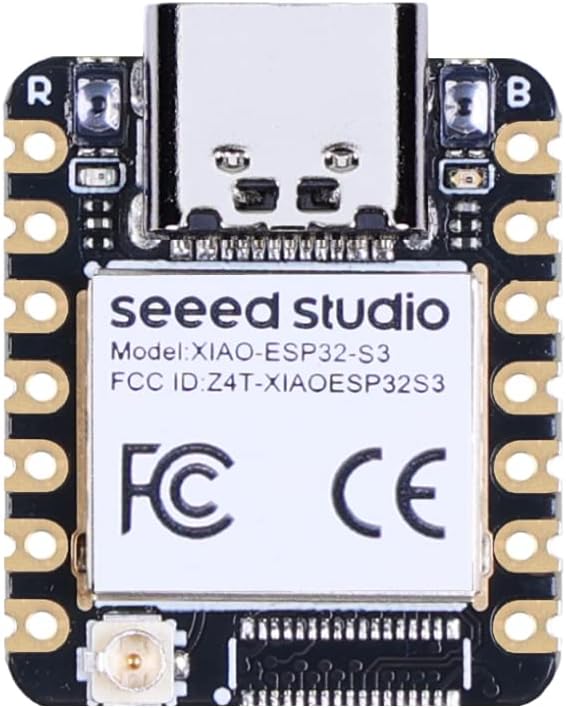
The Seeed Studio XIAO ESP32S3 is perfect for wearable tech and battery-powered projects where size is critical. Rated 4.7 stars, it packs the ESP32-S3 power into a thumb-sized package. Its battery charge management capability makes it ideal for portable devices without needing external charging circuits.
We may earn a commission when you buy through this link, at no additional cost to you.
Power efficiency is a strong suit here, with deep sleep modes consuming as little as 14 microamps. This extends battery life significantly for remote sensors. Despite its small size, it maintains a rich interface and supports both Arduino and MicroPython for flexible development.
The only trade-off is the reduced number of GPIO pins compared to larger boards, but this is acceptable given the form factor. It fits easily into custom enclosures and is perfect for drones or wearable health monitors. The design is robust and easy to integrate into compact projects.
If you need a microcontroller for a wearable or portable device, this board is the clear winner. It balances power, size, and battery management better than any other option in this category.
Built-in charging management means you can connect a battery directly without extra components.
Deep sleep modes ensure long battery life for projects running on coin cells or small packs.
We may earn a commission when you buy through this link, at no additional cost to you.
Buying three boards at once is practical for teams or classrooms needing multiple nodes. This Waveshare set features the ESP32-S3FH4R2 module with a ceramic antenna for reliable signal reception. Rated 4.4 stars, it offers consistent performance across all units.
We may earn a commission when you buy through this link, at no additional cost to you.
The boards have independent power supply settings and support flexible clock control to optimize energy use. Castellated pins allow direct soldering onto carrier boards, making them easy to integrate into custom PCBs. The frequency is a solid 240MHz, matching many top-tier options.
The main drawback is that USB cables are not included, but for a three-pack, the savings are significant. It is great for sensor networks where multiple devices are required to monitor different zones. The quality is robust enough for production prototyping.
If you are building a distributed IoT system or need backups for your main project, this pack is cost-effective. It ensures you have enough units to test and deploy without worrying about running out during development.
Three boards allow for simultaneous testing and deployment across a wider area or network.
Castellated edges enable soldering directly onto custom carrier boards for compact designs.
We may earn a commission when you buy through this link, at no additional cost to you.
The ELEGOO ESP-32 Super Starter Kit is perfect for those just starting their journey. It includes over 35 modules including sensors, motors, and displays. Rated 4.3 stars, it provides everything needed to build diverse projects from weather stations to smart home controllers.
We may earn a commission when you buy through this link, at no additional cost to you.
Access to 30+ projects with clear code and circuit diagrams makes learning straightforward. The kit covers the fundamentals of electronics and coding without requiring prior experience. It uses a standard ESP-32 board with full Wi-Fi and Bluetooth integration.
While it costs more than a standalone board, the included components save money in the long run. It eliminates the hassle of sourcing individual parts for every experiment. The focus on education ensures you understand how each module works together.
This kit is the ideal starting point for students and hobbyists. If you want an all-in-one solution to master IoT and electronics, this provides a clear path to building real-world projects.
Step-by-step guides help you understand how to connect sensors and write code effectively.
Everything needed for dozens of projects is included in one box.
We may earn a commission when you buy through this link, at no additional cost to you.
The Arduino Nano 33 IoT is designed for projects where security is paramount. Although it uses a SAMD21 processor, its robust security features make it a top contender. Rated 4.5 stars, it includes a secure element for hardware-level encryption and cloud communication safety.
We may earn a commission when you buy through this link, at no additional cost to you.
It supports Wi-Fi and Bluetooth Low Energy efficiently, enabling seamless data transfer to mobile apps or the cloud. The board comes with pre-soldered headers for easy breadboarding. Its built-in sensors simplify initial testing for temperature or light monitoring.
If you specifically need ESP32-S3 capabilities, this might be a fallback. However, for secure IoT deployments in enterprise settings, its security architecture is superior. It offers reliability that protects data and prevents unauthorized access.
This board is best for users prioritizing data privacy and cloud security. If you need a proven, secure platform for critical applications, it remains a solid choice.
Secure Element ensures that data remains encrypted and protected at the hardware level.
Seamless connection to cloud platforms ensures data can be processed securely anywhere.
We may earn a commission when you buy through this link, at no additional cost to you.
This ESP-WROOM-32 option is a classic choice for developers familiar with legacy systems. Rated 4.4 stars, it offers reliable 2.4GHz Wi-Fi and Bluetooth via an integrated RF module. It supports AP and STA modes efficiently for network flexibility.
We may earn a commission when you buy through this link, at no additional cost to you.
The three-pack offers great value for building sensor networks. It works perfectly with Arduino IDE and supports Freertos for multitasking. While it lacks modern upgrades like USB-C, it remains stable for standard IoT tasks.
It is ideal for projects where budget and simplicity are key. If you do not need the latest features like MicroPython or Bluetooth 5.0, this board provides robust performance at a low price.
For retrofits or simple sensor nodes, this board is a reliable workhorse. It ensures compatibility with a wide range of shields and legacy code.
AP and STA modes allow the board to act as a server or client easily.
Three units provide a solid base for a sensor network without high cost.
We may earn a commission when you buy through this link, at no additional cost to you.
These ELEGOO dev boards bring a modern touch with USB-C connectivity for reliable data transfer. Rated 4.7 stars, they support OTA updates so you can update firmware remotely via Wi-Fi. The dual-core processor delivers fast performance for automation tasks.
We may earn a commission when you buy through this link, at no additional cost to you.
The boards are designed for power-saving modes and dynamic clock scaling. They support Bluetooth 4.2 and Wi-Fi for standard wireless needs. While not the latest Bluetooth 5.0, they remain compatible with many existing devices.
The USB-C port simplifies wiring and power delivery compared to micro-USB models. This convenience makes them a favorite for students and developers who value modern interfaces. They are solid performers for general IoT applications.
If you need reliable boards with convenient charging ports, this pack is an excellent choice. It offers a balance of modern features and proven stability for daily use.
Type-C port ensures easier connection and modern power delivery for the board.
OTA support allows firmware updates without physical connections to the device.
We may earn a commission when you buy through this link, at no additional cost to you.
The Arduino UNO R4 WiFi merges traditional reliability with modern wireless power. Rated 4.7 stars, it features a dual-core setup combining Renesas and ESP32-S3 chips. It includes a 12×8 LED matrix for visual feedback and CAN bus for automotive or industrial control.
We may earn a commission when you buy through this link, at no additional cost to you.
The 12-bit DAC and OP-AMP provide precise analog control suitable for audio or industrial sensors. It supports Wi-Fi and Bluetooth 5.0 for robust connectivity. The Qwiic connector simplifies sensor wiring, reducing the need for extra hardware.
While larger than the Nano form factor, it offers capabilities that justify the size. It is perfect for complex robotics or automation systems requiring precise analog outputs and network control. It balances power with user-friendly features.
This board is ideal for advanced users needing a professional toolset. If you require industrial-grade features in a compact form, it provides the most comprehensive capabilities available.
12-bit DAC and OP-AMP allow for precise signal generation for high-fidelity analog projects.
Built-in CAN support ensures reliable communication for industrial and automotive robotics.
We may earn a commission when you buy through this link, at no additional cost to you.
Choosing the right board depends on your specific project needs. Here are the critical factors to consider when purchasing.
The processor determines how fast your board can run tasks. Models with dual-core chips like the ESP32-S3 or RISC-V offer higher speeds and better multitasking capabilities for complex applications like machine learning or real-time data processing. Ensure the frequency meets your application requirements.
For simple sensors, standard speed is fine. For video or audio, seek high-frequency dual-core options.
Wi-Fi and Bluetooth are essential for IoT projects. Look for Bluetooth 5.0 for longer range and better power efficiency. Wi-Fi standards vary, but most modern boards support 802.11 b/g/n. Check if the board supports both AP and STA modes for flexibility in network setup.
Bluetooth 5.0 provides better range and power efficiency. Wi-Fi support is non-negotiable for cloud connectivity.
Flash memory stores your code, while RAM handles running processes. Boards with 16MB Flash and multiple MBs of PSRAM are better for storing assets or large libraries. If you plan to run complex applications or store sensor data on the device, prioritize high memory capacity.
Aim for 8MB PSRAM for advanced applications. Ensure enough Flash to store your code comfortably.
Battery life is crucial for wearable or remote projects. Look for deep sleep modes and built-in battery charging circuits. Boards with USB-C often manage power more efficiently than micro-USB. Consider if your project requires continuous power or can operate intermittently.
Deep sleep modes extend battery life significantly. Ensure the board supports charging if battery powered.
Advanced projects may need specific interfaces like CAN bus, MIPI, or DACs. Industrial or audio projects benefit from analog output capabilities. Ensure the board has enough GPIO pins for your sensors and actuators. Check compatibility with I2C, SPI, and UART protocols.
Industrial boards offer CAN and DACs. Ensure enough GPIO pins for all peripherals.
Arduino IDE support is standard for most boards. MicroPython compatibility offers easier coding for beginners. Check if the manufacturer provides clear documentation and example projects. Strong community support ensures you can find solutions to common issues quickly.
Prioritize boards with Arduino and MicroPython support for flexibility.
Size matters for wearables and tight enclosures. Compact boards like the XIAO fit better in small spaces. Larger boards like the UNO R4 offer more connectors. Choose the size that best matches your physical constraints and project requirements.
Thumb-sized is best for wearables. Standard size suits prototypes with many connectors.
Prices range widely based on features. Boards with advanced chips cost more but offer better longevity. Consider buying in packs for sensor networks. Ensure you budget for accessories like cables and adapters if not included in the kit.
Buy packs for multiple sensors. Balance cost with required features for your project.
Connect your board to your computer using a USB-C cable. Install the latest Arduino IDE and configure the board settings under the Tools menu. Select the correct port and board type to ensure the compiler recognizes your device.
Upload your code by clicking the Upload button. If using MicroPython, follow the flashing instructions to load the interpreter. Keep your code simple for testing, then expand features as you verify connectivity and performance.
Keep your board dry and away from extreme heat to prevent damage. Use a breadboard or custom carrier board for stable connections. If using a battery, ensure the charging circuit is compatible to avoid overcharging.
Not all boards support MicroPython out of the box, but most modern ESP32-S3 models like the Arduino Nano ESP32 and generic clones do. Check manufacturer documentation for compatibility. Flashing a MicroPython firmware usually requires a simple USB connection.
The Nano 33 IoT uses an ARM Cortex-M0+ processor and secure element for cloud security, while the Nano ESP32 uses the ESP32-S3 chip for superior Wi-Fi and Bluetooth performance. The ESP32 offers better connectivity and modern interfaces.
The ESP32-P4-NANO offers RISC-V architecture and advanced image processing features that the S3 lacks. For complex visual projects, it is superior. For standard IoT tasks, the S3 provides excellent performance at a lower cost.
Some boards like the Nano ESP32 come with pre-soldered headers. Others may require soldering. Check the product description carefully. If it says 'with headers', no soldering is needed for standard connections.
Most modern boards like the Arduino Nano ESP32 and UNO R4 support Bluetooth 5.0. Older models may only support 4.2. If you need better range or pairing features, ensure the specs confirm 5.0 compatibility.
Yes, boards with Wi-Fi support usually include OTA update capabilities. Ensure your firmware supports OTA and the board connects to your network. This allows updates without a USB cable.
The Arduino Nano ESP32 remains the top choice for its balanced performance and ease of use. For those on a budget, the ESP32-S3-Nano offers incredible value without sacrificing essential features. The ESP32-P4-NANO is unmatched for advanced image and voice processing needs.
Prioritize wireless standards and memory capacity based on your specific project goals. Ensure the board supports your preferred programming language to streamline development. Matching the hardware to your skill level and task complexity ensures a successful build.
Prices and availability change quickly on online retailers. Always verify current listings before purchasing to ensure you get the best deal. Select the board that aligns best with your technical requirements and budget constraints.