
2Pcs Nano V3.0 Board
4.5Editor score
ATmega328P with CH340G chip
USB-C port included with cables
Breadboard-friendly compact design
This guide compares the top Arduino Nano boards for 2026, evaluating performance compatibility connectivity and value to help you choose the right microcontroll
The Arduino Nano board remains a cornerstone for hobbyists and professionals needing compact microcontrollers. Its small size and versatile I/O make it ideal for wearables robotics and embedded systems. Selecting the right variant depends on your specific project requirements and budget constraints.
We evaluated ten distinct Nano offerings based on chip specifications connectivity options and build quality. Our analysis covers official releases third-party clones and modern variants with enhanced features like USB-C and wireless capabilities. Each entry was assessed for compatibility with the Arduino IDE and real-world usability.
Each pick below highlights key strengths potential drawbacks and ideal use cases for your build. While prices may fluctuate due to market conditions the relative value propositions remain consistent across these models. Check current listings before purchasing to ensure you get the best deal available.
4.5Editor score
4.6Editor score

4.5Editor score
The following table provides a side-by-side comparison of all ten featured Nano boards allowing you to quickly assess key specifications and features side by side.


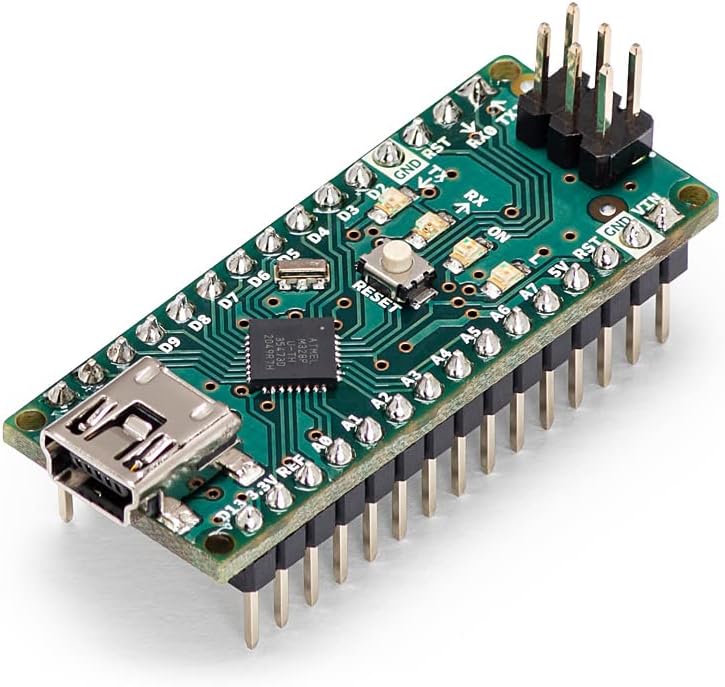
The official Arduino Nano [A000005] stands out as the gold standard for compact microcontrollers with a strong 4.6 rating. Its ATmega328P core delivers reliable performance for prototyping and embedded systems across various industries.
We may earn a commission when you buy through this link, at no additional cost to you.
Key strengths include its versatile I/O options with 14 digital pins and 8 analog inputs enabling precise control over sensors and motors. The built-in mini-USB port simplifies programming and power supply without extra components.
Trade-offs involve the older mini-USB port which may require specific cables compared to modern USB-C standards. The higher price reflects official branding but remains competitive for quality assurance.
Ideal for beginners and engineers seeking proven reliability for IoT robotics or wearables. This board ensures smooth integration with existing shields and libraries making it a robust choice for critical projects.
Full compatibility with Arduino IDE allows instant access to vast libraries and examples for rapid development cycles.
Despite its small footprint it handles complex embedded tasks without compromising performance or connectivity options.
We may earn a commission when you buy through this link, at no additional cost to you.
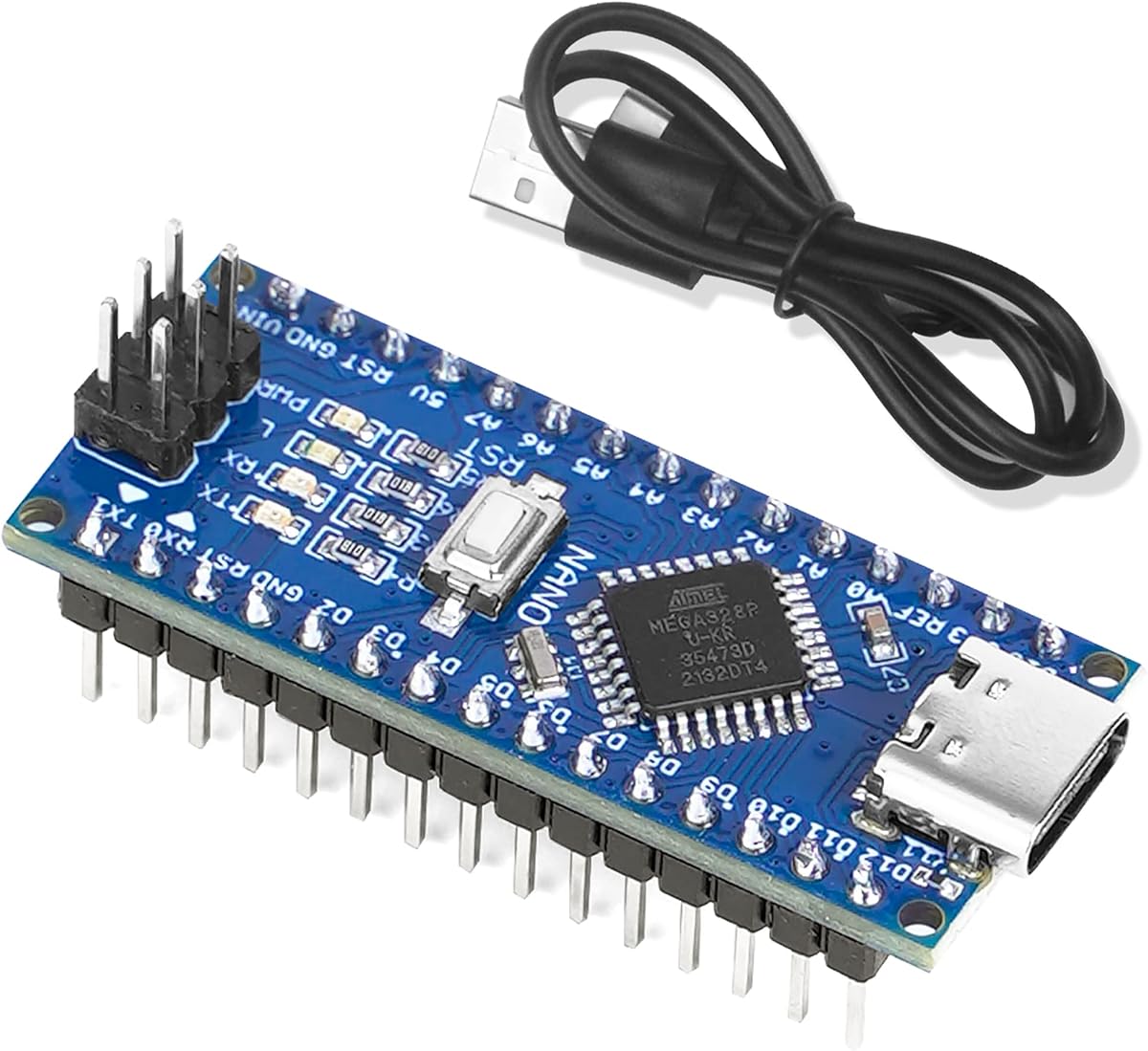
This budget-friendly two-pack delivers exceptional value with a 4.5 rating and features modern USB-C connectivity. The ATmega328P with CH340G chip ensures smooth operation across Windows Mac and Linux systems.
We may earn a commission when you buy through this link, at no additional cost to you.
Strengths include the inclusion of cables and dual boards allowing simultaneous project testing or spares. Flexible power supply options support USB-C or external voltage for versatile deployment scenarios.
Trade-offs involve third-party manufacturing quality which may vary slightly from official boards. Limited to standard Nano features without modern enhancements like wireless capabilities.
Perfect for students and hobbyists needing reliable boards for classroom or home projects. The cost-effective packaging makes it easy to experiment without financial risk while maintaining functionality.
Upgraded USB-C port simplifies cable management and ensures compatibility with newer computers and power sources.
Receiving two boards allows for redundant backups or parallel prototyping to accelerate your development timeline.
We may earn a commission when you buy through this link, at no additional cost to you.
The Arduino Nano R4 redefines the compact microcontroller space with a powerful Renesas RA4M1 core and advanced features. It offers robust performance for sophisticated embedded applications requiring reliable real-time processing.
We may earn a commission when you buy through this link, at no additional cost to you.
Key advantages include the Qwiic connector for effortless sensor expansion and a programmable RGB LED for system feedback. Pre-soldered headers streamline prototyping while castellated edges enable direct PCB mounting.
Trade-offs involve adapting to a newer ecosystem that may require learning new tools or libraries. The premium price reflects enhanced capabilities but exceeds basic clone options.
Ideal for advanced makers and educators needing high-speed performance and modular expansion. Its design balances ease of use with professional-grade features suitable for production-ready prototypes.
Qwiic connectors allow instant connection to sensors and peripherals without soldering wires for quick testing.
Programmable RGB LED provides intuitive status indicators enhancing user interaction and debugging efficiency.
We may earn a commission when you buy through this link, at no additional cost to you.
This three-pack by LAFVIN offers solid performance with a 4.6 rating and improved CH340G chip for better driver compatibility. It works seamlessly with Arduino IDE on Windows Mac and Linux systems.
We may earn a commission when you buy through this link, at no additional cost to you.
Strengths include the large quantity enabling multiple projects and backups. The USB-C power option provides modern convenience while maintaining classic Nano form factor and functionality.
Trade-offs involve non-official branding which may lack some quality assurances of genuine boards. Standard Nano specs limit performance compared to newer Every or R4 variants.
Perfect for educators needing multiple units for class projects or hobbyists building distributed sensor networks. The balance of cost and reliability makes it a practical choice for bulk deployments.
The CH340G chip ensures broad OS support reducing setup friction for beginners using various operating systems.
Three boards allow simultaneous development across different devices simplifying testing of multi-node IoT systems.
We may earn a commission when you buy through this link, at no additional cost to you.
ELEGOO delivers three pre-soldered boards with USB-C support rated 4.6 for ease of use. The design eliminates soldering barriers allowing immediate connection to breadboards and sensors.
We may earn a commission when you buy through this link, at no additional cost to you.
Key strengths include practical upload guidance and included USB-C cable simplifying setup. Pre-soldered headers save space while enabling rapid prototyping without additional assembly steps.
Trade-offs involve fixed headers that may limit custom PCB integration. Traditional Nano specs constrain performance compared to Every or ESP32 options.
Ideal for beginners needing plug-and-play simplicity and educators setting up labs quickly. The quantity ensures enough units for groups while maintaining consistent quality across boards.
No soldering needed means you can start coding immediately saving time and technical preparation.
Presoldered headers are compact allowing dense layouts on breadboards for complex circuit designs.
We may earn a commission when you buy through this link, at no additional cost to you.
The Nano Every upgrades the classic with an ATmega4809 core offering faster processing and more memory. It retains familiar form factor while delivering improved efficiency for complex embedded tasks.
We may earn a commission when you buy through this link, at no additional cost to you.
Strengths include expanded memory and additional digital pins enabling richer applications without sacrificing compatibility. Seamless IDE integration ensures smooth transition from older Nano projects.
Trade-offs involve adapting to new instruction sets and memory management. Single unit packs may cost more per board compared to multi-packs.
Suitable for intermediate users needing more power without leaving the Arduino ecosystem. Its balance of legacy compatibility and modern specs makes it a versatile upgrade path.
Larger Flash and SRAM support complex code and data logging for advanced application requirements.
Twenty digital I/O pins increase connectivity options for sensors and actuators on single board.
We may earn a commission when you buy through this link, at no additional cost to you.
This Nano variant integrates ESP32-S3 capabilities offering Wi-Fi Bluetooth and advanced processing in a compact form. It excels in wireless IoT applications and edge computing tasks.
We may earn a commission when you buy through this link, at no additional cost to you.
Strengths include MicroPython support for rapid prototyping and HID profiles enabling custom input devices. USB-C ensures stable programming and efficient power delivery for modern setups.
Trade-offs involve higher power draw and complexity compared to basic Nano. May require different development approaches for wireless features.
Ideal for smart home projects and wearable tech requiring wireless connectivity. The combination of power and connectivity makes it a standout for connected device development.
Native Wi-Fi and Bluetooth enable seamless connection to networks and devices without external modules.
MicroPython compatibility lowers the barrier to entry for developers familiar with Python syntax.
We may earn a commission when you buy through this link, at no additional cost to you.
This three-pack offers reliable performance with automatic power source switching rated 4.5 for user convenience. The USB-C socket simplifies connections while maintaining classic Nano functionality.
We may earn a commission when you buy through this link, at no additional cost to you.
Strengths include automatic detection of higher voltage sources and full IDE compatibility across systems. Quantity supports distributed projects or classroom use.
Trade-offs involve standard specs limiting advanced capabilities. Third-party quality may vary slightly.
Best for hobbyists and educators needing multiple units for testing. The simplicity and price make it practical for standard microcontroller tasks.
Automatic switching between USB and external power ensures consistent operation without manual intervention.
Breadboard-friendly design and USB-C allow quick setup for rapid prototyping sessions.
We may earn a commission when you buy through this link, at no additional cost to you.
This variant of the Nano R4 provides loose headers for custom PCB integration with a 4.2 rating for technical users. It shares the powerful Renesas RA4M1 core and advanced connectivity.
We may earn a commission when you buy through this link, at no additional cost to you.
Strengths include castellated edges enabling direct soldering and Qwiic connectors for easy expansion. Ideal for custom hardware designs needing compact form.
Trade-offs involve soldering requirements which may challenge beginners. Lower ratings reflect complexity in setup.
Best suited for makers creating custom PCBs or advanced embedded systems. Offers maximum flexibility for production-grade applications.
Castellated edges allow direct mounting simplifying integration into custom circuit designs.
Qwiic support ensures easy connection to sensors without extensive wiring complexity.
We may earn a commission when you buy through this link, at no additional cost to you.
This single module delivers standard Nano performance with USB-C rated 4.6 for usability. It provides a compact solution for projects needing minimal footprint.
We may earn a commission when you buy through this link, at no additional cost to you.
Strengths include flexible power input and full system compatibility. Breadboard-friendly design simplifies testing.
Trade-offs involve single unit cost and basic specs compared to Every or ESP32.
Perfect for individual prototyping and simple IoT tasks. Cost-effective choice for single board projects.
Minimal size allows fitting into tight spaces without sacrificing essential functionality.
Multiple power options ensure compatibility with various setups and portable use cases.
We may earn a commission when you buy through this link, at no additional cost to you.
Selecting the right Arduino Nano involves evaluating several technical and practical factors.
The microcontroller determines processing power and memory. Classic models use ATmega328P while newer ones offer ATmega4809 or Renesas RA4M1 for enhanced speed.
Choose higher performance variants for complex data processing or advanced tasks.
USB-C is now standard offering better durability and power delivery compared to mini-USB. Wireless options like Wi-Fi and Bluetooth expand capabilities significantly.
Prioritize USB-C and wireless features if your project needs modern connectivity.
Digital and analog pins dictate how many sensors or outputs you can connect. Some boards offer 14 digital pins while others extend to 20.
Ensure sufficient pins for all your project components without extra multiplexing.
Flash and SRAM determine program size and runtime data storage. Newer boards offer significantly more memory for complex applications.
Opt for expanded memory if your code or data logging needs are substantial.
Official Arduino boards guarantee quality and support while clones offer cost savings. Check for robust soldering and reliable connectors.
Invest in official boards for critical projects where failure is costly.
Ensure compatibility with your preferred development environment and shields. Most Nano boards support Arduino IDE but some require specific drivers.
Verify OS support and IDE compatibility before purchasing.
Consider voltage inputs and power management features. Some boards support external voltage more efficiently than others.
Check power specs if running from batteries or regulated external supplies.
Bulk kits offer better value for multiple units while single boards suit one-off projects. Consider future expansion needs.
Buy multi-packs for educational or distributed sensor networks to save costs.
Connect your board via USB to power and program it. Install the required drivers if your operating system does not recognize it automatically.
Use the Arduino IDE to write upload and debug code. Select the correct board type and COM port before uploading sketches.
Handle boards carefully avoiding static discharge and physical damage. Store in dry environments when not in use to preserve electronic components.
Yes most third-party Nano boards like those with CH340G are fully compatible with Arduino IDE. You may need to install specific drivers on Windows for proper recognition but functionality remains identical to official boards.
Nano Every uses the ATmega4809 microcontroller offering more memory and faster processing than the classic ATmega328P based Nano. It also supports USB-C instead of mini-USB while maintaining backward compatibility.
No only newer variants like Nano R4 Nano Every Nano ESP32 and many clones support USB-C. Older official Nano models use mini-USB requiring specific cables for connection.
Arduino Nano ESP32 is ideal for IoT due to built-in Wi-Fi and Bluetooth capabilities. It supports MicroPython and handles network communication efficiently without external modules.
Visit the manufacturer website for driver downloads like CH340. After installation verify the COM port appears in Device Manager and select it within Arduino IDE.
Yes most Nano boards support external voltage via VIN pin ranging from 5V to 12V. Internal regulation ensures stable 5V operation regardless of input source.
We reviewed ten top Arduino Nano boards ranging from classic clones to advanced wireless variants. Each option serves different needs from budget-friendly learning to professional embedded development.
Prioritize USB-C connectivity memory capacity and specific features like wireless when selecting. Official boards ensure reliability while clones offer value for experimental projects.
Always verify current pricing and availability as costs fluctuate. Choose the model that aligns best with your technical requirements and budget for optimal project success.