
SUNLU High Toughness Resin
4.7Editor score
Five times higher elongation
Low shrinkage for accuracy
Widely compatible formula
This guide compares the top ten flexible resin options for 3D printing to help you choose the right material for your durable and bendable printing projects.
Flexible resin for 3D printing allows creators to produce parts that bend, compress, and absorb shock like real rubber or TPU materials. Choosing the right formulation ensures your prints maintain flexibility without becoming brittle or difficult to manufacture on standard LCD or SLA printers.
We evaluated ten leading flexible resins based on their Shore hardness, elongation at break, printability, and overall durability. Each product was assessed for its ability to resist cracking, handle impact, and provide a smooth surface finish suitable for functional prototypes and wearables.
Each selection below highlights specific strengths such as fast curing speeds, low odor, or exceptional rebound properties. Keep in mind that availability and stock levels can change frequently, so verify current details before placing your order for your next printing batch.
4.7Editor score
4.7Editor score
4.2Editor score
The following table provides a side-by-side comparison of all ten selected resins, highlighting their key specifications, intended use cases, and primary performance characteristics to assist your decision-making process.



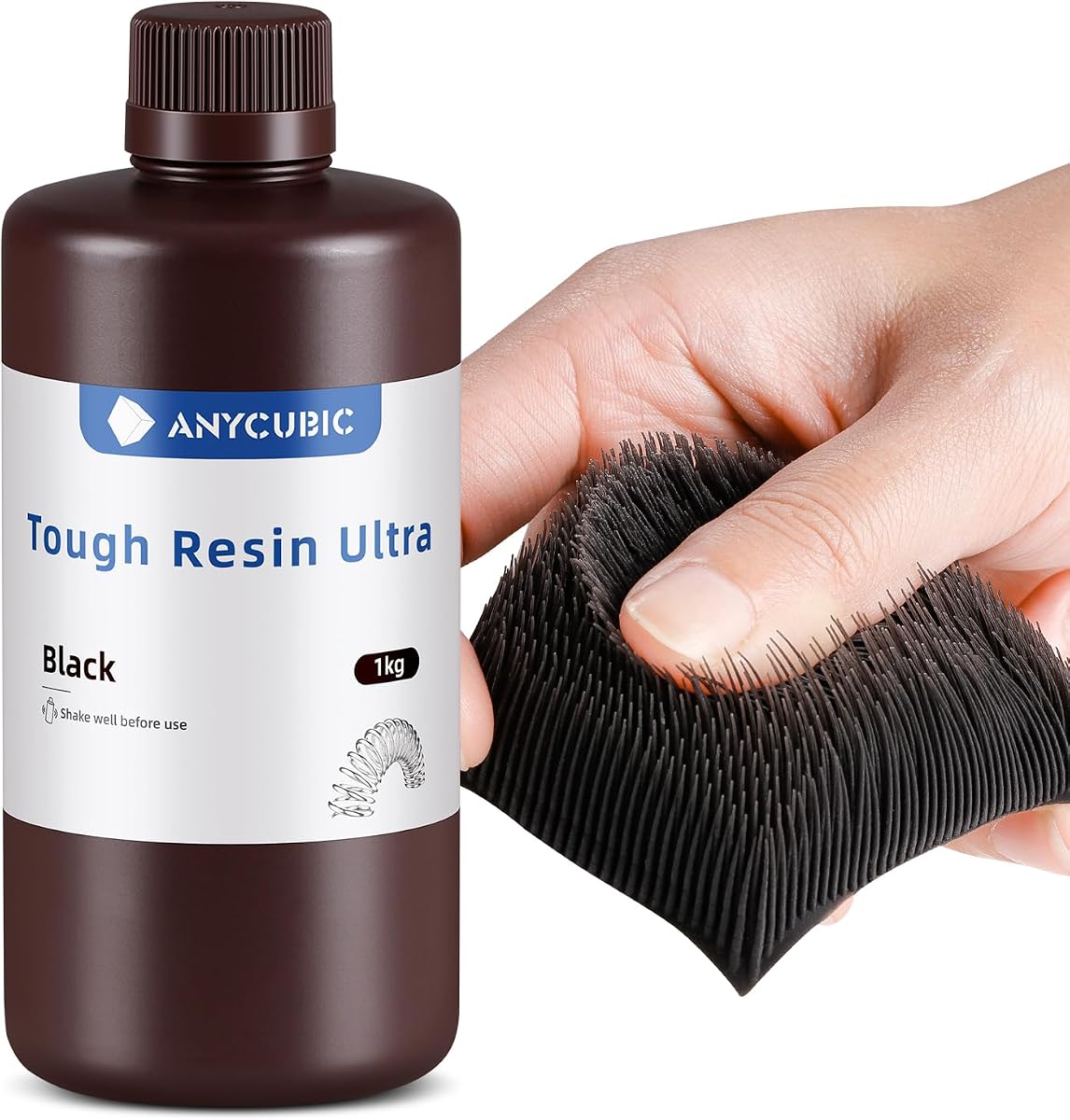
The ANYCUBIC Ultra Tough Resin stands out as the top choice for users needing a balance of flexibility and durability. With a high rating of 4.7 stars, it is recognized for its outstanding toughness and ability to recover its original shape after deformation.
We may earn a commission when you buy through this link, at no additional cost to you.
This resin excels in creating articulated models that require seamless movement between parts. It also offers a non-irritating surface after curing, making it suitable for wearable items like earphone covers. Its formulation resists brittleness even in damp environments.
While it is priced slightly higher than some standard options, the enhanced durability and versatility justify the cost for professional users. It can be used directly or mixed with other resins to boost their toughness without altering the intended color significantly.
Choose this resin if you need reliable performance for functional prototypes or wearable projects. Its broad compatibility with LCD printers ensures you can use it across most desktop setups without adjusting your workflow significantly.
This material withstands external forces well, ensuring your prints do not crack under stress or accidental drops during daily use.
Once cured, the surface is gentle on skin, allowing for comfortable interaction with printed objects like cosplay props or accessories.
We may earn a commission when you buy through this link, at no additional cost to you.
SUNLU High Toughness Resin offers exceptional value with an elongation rate five times higher than standard resin. It holds a strong 4.7 rating for its ability to produce unbreakable models that resist cracking during washing and curing processes.
We may earn a commission when you buy through this link, at no additional cost to you.
The low viscosity ensures better accuracy and shorter curing times, which improves overall print quality. Its low odor makes it comfortable to use in home or office environments without overwhelming fumes during operation.
While primarily available in grey, its performance benefits make it a top pick for functional parts. The leak-proof bottle design adds convenience during storage and transport to prevent waste or spills in your workspace.
Ideal for budget-conscious makers needing durability, this resin fits well into general-purpose printing workflows. Its compatibility with most LCD and SLA printers makes it a versatile addition to any material collection.
This resin is designed to be unbreakable and durable, significantly improving the success rate of structural and solid printed models.
Reduced volume shrinkage means your printed parts maintain their intended dimensions and shape with minimal distortion after curing.
We may earn a commission when you buy through this link, at no additional cost to you.
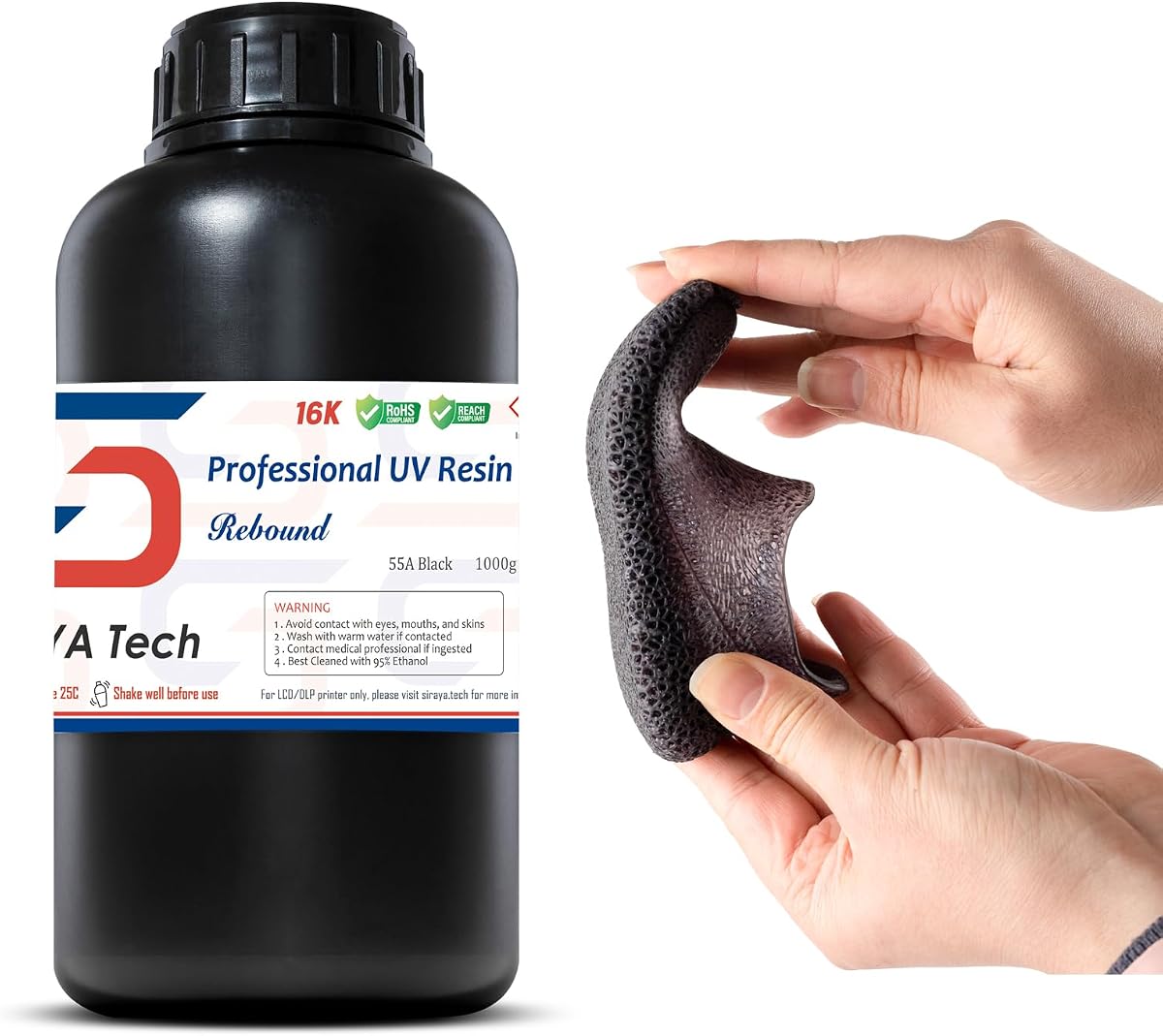
Siraya Tech Rebound 55A is designed for applications requiring quick shape recovery and high elasticity. It provides significantly faster rebound than standard resins, making it a premium choice for shock-absorbing components and gaskets.
We may earn a commission when you buy through this link, at no additional cost to you.
Unlike complex elastomers, this resin prints on standard LCD and DLP printers without special cleaning procedures. It offers a balanced mix of flexibility and structural integrity suitable for industrial prototyping and protective equipment designs.
Though long-term performance testing is ongoing, initial results show good resilience during compression cycles. The price reflects its specialized formulation for high-rebound tasks that standard flexible resins might not handle as effectively.
Select this resin if your project demands rapid elastic recovery and professional-grade shock absorption. It is a specialized tool for makers who need precise control over the rebound characteristics of their finished parts.
The material returns to its original shape quickly after compression, making it excellent for parts that endure repeated impacts or pressure.
It cleans with standard isopropyl alcohol methods, integrating seamlessly into existing printing setups without requiring extra chemicals or steps.
We may earn a commission when you buy through this link, at no additional cost to you.
Siraya Tech Tenacious Flex Black provides a significantly softer and more rubber-like feel than previous versions. It is rated 4.7 for its incredible elasticity and ability to withstand extreme bending without permanent deformation.
We may earn a commission when you buy through this link, at no additional cost to you.
This resin is engineered for dynamic prints that need to absorb shock or handle impact. It resists deformations and cracks, making it a reliable choice for protective components or resilient prototypes in demanding environments.
It can also be used as an additive to boost the flexibility of other tough resins. The small 500g bottle is convenient for testing or small batches, though it may not be as cost-effective for large production runs.
Choose this formulation if you need a soft, rubbery texture for gaskets or grips. Its specialized design for flexibility ensures your parts maintain integrity even under repeated stress or mechanical action.
This formulation allows for extreme bending and compression, ensuring your prints return to their original shape without damage or cracking.
Mixing it with other resins can significantly enhance their impact resistance and flexibility, improving the properties of existing materials.
We may earn a commission when you buy through this link, at no additional cost to you.
Superflex 3D Printer Resin is known for its fast printing speeds and ISO 10993-5 certification for safety. It achieves a Shore 80A hardness, making it ideal for cushioning and shock absorption in medical or ergonomic applications.
We may earn a commission when you buy through this link, at no additional cost to you.
The clear color allows for visual inspection of internal structures, which is useful for functional prototypes. Its balanced softness and strength simulate rubber well, ensuring prints do not tear easily during use or cleaning.
Printing 50um layers in just 1.7 seconds saves significant time and electricity costs. However, the 500g bottle size may require multiple purchases for large projects, which could impact overall budget efficiency.
Use this resin if you need a clear, safe, and durable material for prototypes that interact with skin or require transparency. Its fast printing capability makes it efficient for high-volume or rapid iteration workflows.
Its formulation allows printing at high speeds, enhancing productivity for farms or users with multiple machines running simultaneously.
The resin meets ISO 10993-5 standards when fully post-cured, making it suitable for biomedical or skin-contact applications safely.
We may earn a commission when you buy through this link, at no additional cost to you.
ANYCUBIC Tough Resin 2.0 offers upgraded flexural strength and high precision with minimal shrinkage. It has a rating of 4.6 for its ability to resist peeling and cracking under cyclic vibrations or stress.
We may earn a commission when you buy through this link, at no additional cost to you.
The low-odor formulation reduces volatile organic compounds, creating a comfortable printing environment. Its high precision ensures clear details and smooth surfaces, which is vital for industry parts requiring tight tolerances.
While primarily available in grey, it is designed for broad compatibility with LCD and SLA printers. The eco-friendly aspect makes it appealing for users concerned about volatile emissions during printing operations.
Choose this resin for high-strength model production where accuracy matters. It balances toughness and precision well, ensuring your final parts are durable and detailed without requiring extensive post-processing.
It maintains low shrinkage rates, ensuring printed models keep their intended dimensions and clear details without warping after curing.
The composition is gentle on users, reducing strong smells and creating a more pleasant environment for extended printing sessions.
We may earn a commission when you buy through this link, at no additional cost to you.
SUNLU Flexible 3D Printer Resin offers a 70A hardness with 135% elongation, creating a soft yet strong flexible material. It is designed for bendable items that resist breaking under stress or impact during handling.
We may earn a commission when you buy through this link, at no additional cost to you.
The resin features low shrinkage for accurate size and shape retention. It also has minimal odor and low chemical tolerance, making it stable and reliable for most manufacturing needs without significant deformation.
While it has a lower rating compared to other products, it remains a functional option for standard flexible applications. The leak-proof bottle design ensures safe transport and storage for your 1kg supply.
Use this resin if you need soft, flexible prototypes that are affordable and reliable. Its stability and low shrinkage make it suitable for parts that require consistent dimensions and long-term durability.
The material simulates rubber or durable flexible prototypes, offering the right mix of softness and strength for general use cases.
During curing, the resin shrinks minimally, ensuring accurate dimensions and shapes for your printed parts without deformation.
We may earn a commission when you buy through this link, at no additional cost to you.
ELEGOO Tough 3D Printer Resin combines high toughness with a Shore hardness of 84.7D, offering excellent flexibility and resilience. It is rated 4.5 for its ability to recover quickly after deformation from external forces.
We may earn a commission when you buy through this link, at no additional cost to you.
The material is strong enough to be drilled without cracking, making it ideal for tools and engineering prototypes. Its fine texture and weather resistance ensure the parts perform well even in humid or extreme temperature conditions.
While the hardness is higher than typical flexible resins, this ensures it is tough enough for demanding applications. The low odor and non-irritating formula make it safe for prolonged use in workshops or home offices.
Choose this resin for parts that need to be robust and functional. It is especially useful for printing jigs, fixtures, or end-use products that require high performance and durability over time.
The resin withstands impacts well, making it very suitable for structural parts, tools, and other high-performance models that see heavy use.
It shows resistance to brittleness and corrosion even in high humidity, ensuring consistent performance under varied environmental conditions.
We may earn a commission when you buy through this link, at no additional cost to you.
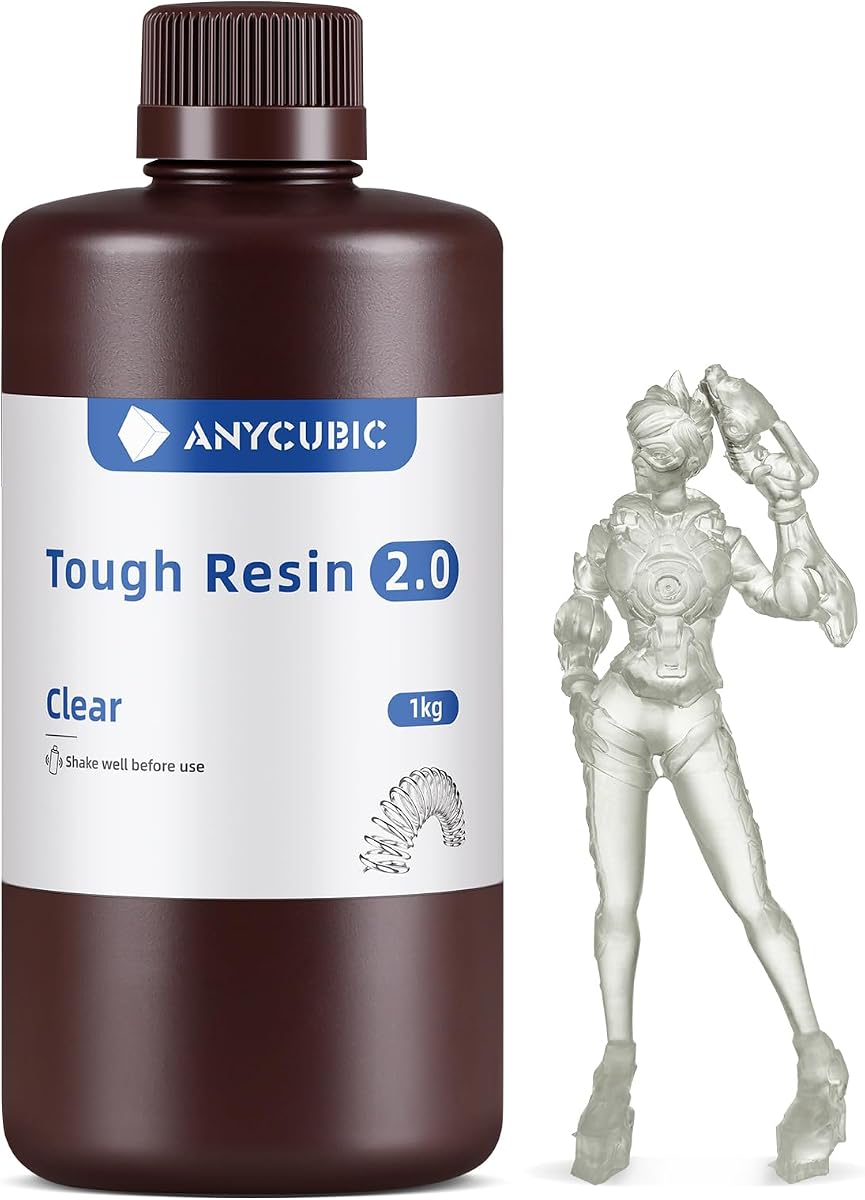
ANYCUBIC Tough 3D Printer Resin 2.0 Clear version offers high precision with exceptional stretch and flexibility. It is rated 4.6 for reducing the likelihood of breakage in delicate or thin models effectively.
We may earn a commission when you buy through this link, at no additional cost to you.
The clear color is useful for parts where internal details need to be visible. Its design cuts down volatile organic compounds, making it an environmentally friendly option for users seeking a comfortable printing environment.
This resin is compatible with a wide range of LCD and SLA printers, ensuring broad usability. While it is designed for high hardness and precision, it maintains enough flexibility to resist damage from drops.
Select this resin for clear, accurate parts that need to be durable. It is perfect for technical applications and detailed models where visual inspection of the print quality is essential.
It ensures high precision prints with minimal shrinkage, allowing you to achieve crisp details and maintain intended part dimensions accurately.
The composition is gentle on users and cuts down VOCs, making it a safer and more pleasant option for extended printing sessions.
We may earn a commission when you buy through this link, at no additional cost to you.
This 3D Printer Resin features a 90A Shore hardness that simulates rubber and TPU, allowing repeated bending without breaking. It is rated 4.4 for its strong tear resistance and reliable performance under stress.
We may earn a commission when you buy through this link, at no additional cost to you.
It is a go-to choice for gaskets, toy tires, and ergonomic grips that need to stay flexible without tearing. The formula offers high precision, ensuring you do not have to sacrifice detail for flexibility in your parts.
The resin keeps its cool under stress, bending where ordinary resins snap. This makes it a practical choice for engineering prototypes and frequently handled parts that demand reliable durability and flexibility.
Choose this resin if you need realistic rubber-like flexibility for functional use. It works great on most LCD and DLP printers, making it a versatile solution for a wide range of mechanical applications.
The product can be folded and bent repeatedly without breaking, providing both softness and strength for realistic flexible components.
It is designed for real-world use, handling repeated stress and staying tough enough not to rip or wear out during normal operations.
We may earn a commission when you buy through this link, at no additional cost to you.
Choosing the right flexible resin involves understanding key factors such as Shore hardness, elongation, and printability to ensure your parts meet performance requirements.
Shore hardness determines the softness of the printed part. A lower A value like 55A is very soft and rubbery, while 80A or 90A is harder and more durable for mechanical use.
Select a Shore hardness that matches the tactile needs of your application, balancing between softness and durability.
Elongation at break measures how much a part can stretch before breaking. Higher elongation percentages like 135% indicate better flexibility and resistance to cracking under tension.
Look for high elongation values if your prints need to bend significantly without snapping or losing their shape.
Printability refers to how well the resin cures and flows during printing. Low viscosity resins cure faster and provide better accuracy, reducing the time and effort required for support removal.
Choose resins with fast curing times and standard cleaning requirements to streamline your workflow and avoid extra processing steps.
Durability measures how well the part withstands drops or external force. High impact resistance is essential for functional prototypes or wearable items that face daily handling.
Prioritize resins labeled as tough or impact-resistant if your parts will be used in demanding environments.
Flexible resins can emit fumes, so safety is paramount. Low-odor formulas reduce volatile organic compounds, creating a safer and more comfortable printing environment.
Opt for low-odor resins and ensure proper ventilation to protect your health and workspace air quality.
While black and gray are standard, some resins like clear options allow for visual inspection of parts. Your choice depends on whether transparency is needed for design or functional reasons.
Check color availability before purchasing to ensure it meets your visual or aesthetic requirements for the project.
Most flexible resins are compatible with 405nm LCD and DLP printers. Ensure your printer supports the resin's wavelength to avoid curing issues or failed prints.
Verify compatibility details on the product page to ensure the resin works with your specific printer model.
Before printing, shake the bottle gently to ensure uniform mixing of the resin. Pour it carefully into your printer's tank, avoiding bubbles that could affect layer adhesion and surface quality.
Use appropriate supports for flexible prints to prevent sagging or distortion during curing. After printing, wash the part with isopropyl alcohol using gentle brushing to remove uncured material without damaging delicate features.
Post-cure your prints fully under UV light to achieve maximum strength and stability. Store the resin in a cool, dark place in its leak-proof bottle to prevent degradation and extend its shelf life for future use.
Flexible resin is formulated with elastomers that allow the printed part to bend and stretch without breaking. Standard resin is rigid and brittle, making flexible resin ideal for parts that need to absorb shock or interact with the body.
Flexible resin can be sticky due to its elasticity. Use an FEP film with low adhesion, ensure your printer is well-calibrated, and consider reducing peel times to minimize sticking during the print process.
Yes, but flexible resin may require thicker supports to prevent detachment or sagging. Using a slightly higher support density can help maintain structural integrity during the curing process.
Many flexible resins become skin-safe after full curing. Always check if the resin has safety certifications like ISO 10993-5 to ensure it is non-toxic and safe for wearable applications.
Flexible resin usually requires a full post-cure, often longer than standard resin. Follow the manufacturer's guidelines, typically 10 to 30 minutes under UV light, to ensure the part reaches its final properties.
Yes, some flexible resins can be mixed with standard resins to adjust hardness. However, test small batches first to ensure compatibility and maintain desired printing quality and flexibility.
The ten resins reviewed here offer a wide range of flexibility, hardness, and durability for various applications. Whether you need a soft rubber-like feel or a tough impact-resistant part, there is a product designed to meet your needs.
Prioritize factors like Shore hardness, elongation, and printability when selecting a resin. Understanding your specific requirements will help you choose a material that delivers consistent results for your projects.
Always check current availability and stock before making a purchase. Prices and product versions may change, so verify the latest details to ensure you get the right material for your next print.