
Korg Volca Drum Digital Percussion Synthesizer w/ 16-step Sequencer and Active Step
4.4Editor score
Compact portable design
16-step sequencer
Six-part DSP synth engine
This guide compares the top ten digital drum machines for 2026, evaluating sound quality, workflow, portability, and connectivity to help you find the perfect
Digital drum machines have revolutionized music production by offering portable, versatile rhythm tools that fit any workflow. Whether you are a seasoned producer or a beginner, choosing the right device can transform your creative process significantly.
We evaluated ten leading models based on sound libraries, sequencing capabilities, build quality, and ease of use. Our analysis covers standalone units, hybrid machines, and pedal formats to ensure comprehensive coverage for every type of musician.
Each pick highlights key strengths and potential limitations to help you make an informed decision. Please note that product availability and pricing can change frequently, so check current listings before purchasing your next instrument.
4.4Editor score

4.8Editor score

4.4Editor score
The following table provides a side-by-side comparison of all ten digital drum machines reviewed in this guide. Examine the specifications to determine which model aligns best with your specific production needs and budget constraints.
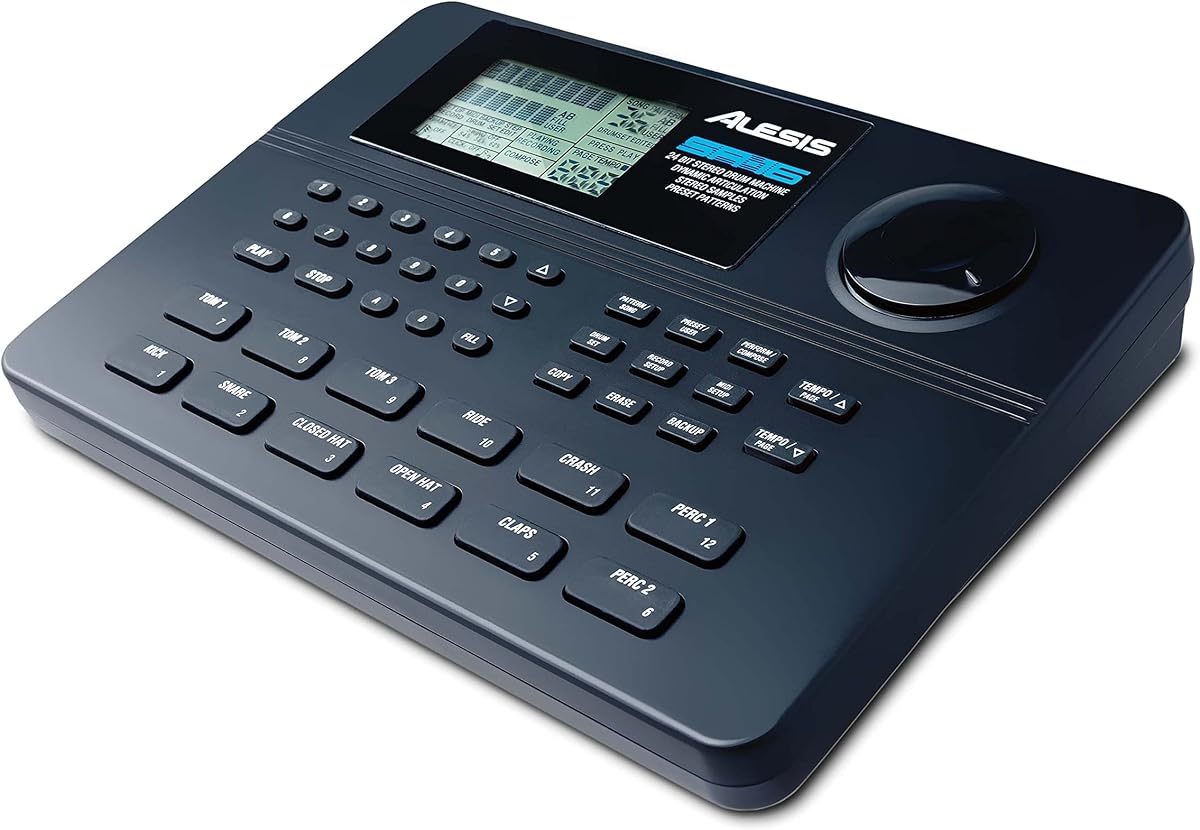


The Alesis SR-16 stands as a studio icon for songwriters and live performers seeking reliable rhythm tools. With a solid 4.4 rating, it delivers professional sounds through Dynamic Articulation technology that adds realism to every beat.
We may earn a commission when you buy through this link, at no additional cost to you.
Its strength lies in the extensive library of 233 sounds assignable to any of the 12 velocity sensitive pads. Users can create 50 preset or user drum kits, making it versatile for remix engineers and electronic drum kit integration.
While the interface reflects older design standards, the seamless MIDI connectivity ensures it works well with modern keyboards and DAWs. The production-ready features like sound stacking and step editing bridge the gap between vintage feel and modern utility.
This machine is ideal for those needing a durable, cost-effective rhythm partner without sacrificing sound quality. If you prioritize classic tones and straightforward operation over cutting-edge sampling, the SR-16 remains a strong contender in today's market.
This exclusive feature ensures hits sound realistic by varying velocity and tone, adding depth to simple patterns.
With four stereo outputs and footswitch jacks, integrating the SR-16 into live setups or studio racks is seamless.
We may earn a commission when you buy through this link, at no additional cost to you.
The Roland TR-8S combines legendary heritage with modern production techniques, earning a top 4.8 rating. It offers authentic TR drum machine sounds through detailed circuit models of iconic machines like the 808 and 909.
We may earn a commission when you buy through this link, at no additional cost to you.
Its versatile kit design allows mixing sampled sounds with TR sounds, creating genre-defying tracks. Users can import mono or stereo sounds via SD card and manipulate decay, tuning, and direction for unique sonic results.
Although it commands a higher price, the comprehensive effects processing and workflow software justify the investment. The ability to save instrument and master effects with each kit ensures performances are always ready without setup delays.
For producers seeking professional sound design tools that honor the past while embracing the future, the TR-8S is unmatched. Its flexibility makes it suitable for both studio production and dynamic live performances requiring instant adaptability.
Create entirely sample-based kits or mix TR sounds to demand attention with unique, custom rhythm tracks.
The free TR-EDITOR provides expanded visual controls to further amplify the creative possibilities of the TR-8S.
We may earn a commission when you buy through this link, at no additional cost to you.
The Korg Volca Drum offers a compact and portable design perfect for on-the-go music creation. With a 4.4 rating, it features a built-in speaker and six-part DSP synth engine for a wide range of drum sounds.
We may earn a commission when you buy through this link, at no additional cost to you.
Its 16-step sequencer supports intuitive programming, while the Active Step function replaces steps to add variety. The Waveguide resonator adds rich resonances, and the Slice function allows intricate rhythms like drum-rolls easily.
While the step count is limited, the randomize functions expand inspiration by changing sounds and settings randomly. This makes it an affordable yet high-quality option for professional use in both studio and live settings.
Ideal for beginners and experienced users needing a quick sketchpad for ideas, the Volca Drum excels in portability. Its simple workflow ensures creativity flows without technical barriers, making it a favorite for spontaneous rhythm design.
This feature adds rich resonances to drum sounds, giving them acoustic depth usually found in larger hardware.
Group parts for choking to simplify setup and allow for tighter, more controlled performance dynamics.
We may earn a commission when you buy through this link, at no additional cost to you.
The Yamaha DTX Multi Pad provides access to 1,061 drum and percussion sounds alongside 216 keyboard sounds. It serves as a powerful pad controller that enhances live performances and studio sessions with diverse sonic options.
We may earn a commission when you buy through this link, at no additional cost to you.
Features like the Mute/Layer function and sequencer with preset loops allow for dynamic arrangement without external gear. The 64MB Flash-ROM ensures users can store custom samples directly on the unit for quick access during shows.
While it functions more as a sound module than a full sequencer, its integration with Yamaha setups is seamless. The sheer volume of sounds makes it suitable for multi-instrumentalists needing one pad to cover various genres.
This unit is recommended for performers wanting immediate access to a vast library of sounds. It complements existing electronic kits or desktop DAWs by offering tactile control over a massive sonic palette without complex routing.
Access over a thousand drum sounds to fit any genre requirement instantly during live or studio sessions.
User samples can be stored securely, ensuring custom sounds are ready whenever needed without reloading.
We may earn a commission when you buy through this link, at no additional cost to you.
The Akai Professional MPC Sample delivers the iconic MPC workflow in a compact, modern format. Rated 4.8 stars, it is a battery-powered design with a built-in speaker and internal microphone for recording anywhere.
We may earn a commission when you buy through this link, at no additional cost to you.
Its 16 responsive pads and hands-on workflow support fast sampling, chopping, and beatmaking for all skill levels. The Instant Sample Chop Mode and real-time timestretch/repitch features ensure quick transitions from raw sounds to finished grooves.
Four internal FX processors with dedicated knob control add character through vinyl emulations and compression. While the display is small, the interface remains intuitive for quick edits without needing a computer connection.
This sampler is perfect for creators wanting the MPC feel in a portable form factor. It bridges the gap between desktop software and standalone hardware, making it a versatile tool for live performers and beatmakers alike.
Enjoy true independence with battery power and SD storage, enabling production anywhere without a computer.
Dedicated knobs for effects allow immediate sonic manipulation without deep menu diving during performances.
We may earn a commission when you buy through this link, at no additional cost to you.
The EP-133 K.O. II doubles the memory of its predecessor and adds advanced sampling capabilities. With a 4.7 rating, this sampler offers a fast workflow to get you from idea to track faster than ever before.
We may earn a commission when you buy through this link, at no additional cost to you.
Its sequencer engine supports intuitive beat building using groups and patterns. The commit button helps freeze a point in time, allowing you to move on to verses or breaks in real time seamlessly.
Punch-in effects and a multifunctional fader allow you to tweak parameters like filter and pitch while playing. It comes loaded with melodic and drum samples, plus 128MB memory for extensive customization.
This machine is ideal for portable production where speed and creativity matter most. Whether running on batteries or USB-C, it fits easily in a bag for spontaneous sessions anywhere you have an idea.
Build up beats quickly using 4 groups x 99 patterns to experiment with combinations instantly without complex menus.
Record sounds around you using the line-in or mic to sample favorite synths and vinyl records easily.
We may earn a commission when you buy through this link, at no additional cost to you.
The KORG drumlogue offers a threefold hybrid engine combining analog, digital, and multi-engine capabilities. This allows users to customize sound deeply using open-source User Oscillators and effects for unique tones.
We may earn a commission when you buy through this link, at no additional cost to you.
Front Panel Knobs provide instant control over tuning and attenuation, while dedicated volume knobs for each part aid live mixing. Powerful sequencer features like loop and chain functions support complex performances and songs.
Reverb and delay per part ensure rich sonic textures, and USB-C connectivity supports loading custom samples. The ability to use third-party effects via the MULTI engine expands creative possibilities beyond standard settings.
While it has a learning curve, the customization potential is unmatched in this class. For sound designers seeking a drum machine that acts like a modular synth, the drumlogue offers a robust and flexible platform.
Combine analog warmth, digital precision, and open-source multi-engine options for limitless sound design.
Dedicated volume knobs for each part allow you to balance tracks dynamically during live performances.
We may earn a commission when you buy through this link, at no additional cost to you.
The Behringer LM DRUM features pristine audio quality with 16 voices of sampling architecture. It comes bundled with headphones and cables, making it ready for immediate setup and creative exploration upon arrival.
We may earn a commission when you buy through this link, at no additional cost to you.
Comprehensive connectivity includes MIDI In/Out/Thru and USB 2.0 Type B for seamless integration. The 64-step drum sequencer supports poly-meter and real-time triggering, ensuring flexibility for complex rhythmic patterns.
Sixteen independent analog outputs allow for multi-track recording or external processing per voice. This makes it a strong choice for producers needing modular control over individual drum elements in a mix.
For those valuing robust build quality and modular capabilities at a competitive price, this bundle is excellent. It bridges the gap between sample playback and traditional drum sequencing effectively in any live or studio environment.
Experience dynamic drum sounds suitable for professional-grade productions through its advanced sampling architecture.
Route each voice to separate outputs for detailed mixing and mastering without internal routing limitations.
We may earn a commission when you buy through this link, at no additional cost to you.
The Elektron Digitakt II offers 16 audio tracks ready for stereo samples or MIDI, providing immense power. With a 128-step sequencer and three assignable LFOs per track, it allows for detailed rhythmic modulation and variation.
We may earn a commission when you buy through this link, at no additional cost to you.
Effects like delay, reverb, and overdrive per track ensure rich production quality. Swappable filters including Low Pass 4, Comb, and EQ allow for deep sculpting of the sound palette within the hardware.
Song Mode allows creation and editing of full compositions with ease, while Euclidean sequence generator adds complex patterns. The interface is precise but may require learning time to master its full capabilities.
For producers needing a powerful, standalone sampling sequencer for professional electronic music, this is a top choice. Its flexibility in pattern and sound manipulation makes it a standard tool for many modern electronic artists.
Record entire compositions on 16 tracks independently for detailed mixing and layering within the device.
Choose from multiple filter types like Comb and EQ to sculpt sound character without external plugins.
We may earn a commission when you buy through this link, at no additional cost to you.
The Singular Sound BeatBuddy is the first-ever drum machine in a pedal format, offering hands-free control. With a 4.5 rating, it includes 200+ songs across 24 genres, ideal for guitarists needing real-time live control.
We may earn a commission when you buy through this link, at no additional cost to you.
The visual metronome helps improve rhythm and master complex time signatures effortlessly. Customization is massive, with storage for 3.2 million songs and 300 drum sets to ensure endless variety for any gig.
It mimics a real drummer with studio-quality sound and analog feel. Its ultra-lightweight design ensures easy transport for gigs and practice sessions without compromising on sound quality or control features.
This pedal is perfect for solo performers needing to control beats without touching a keyboard. It frees up hands for guitar playing or vocal performance, making it a unique tool in the rhythm tool market.
Control beats live with physical foot controls, allowing other musicians to focus on their primary instruments.
Store thousands of songs and drum sets to ensure your performance can adapt to any genre requirement instantly.
We may earn a commission when you buy through this link, at no additional cost to you.
Selecting the right digital drum machine requires understanding your specific needs regarding workflow, sound quality, and portability. This guide breaks down the essential factors to consider.
Evaluate the richness and variety of the sound library. High-quality machines offer detailed samples, synthesis options, or hybrid engines to produce realistic and creative drum sounds.
Look for devices with extensive built-in kits or sampling capabilities to ensure you have enough sonic variety for your projects.
Check the step count and features of the sequencer. Advanced machines provide pattern chaining, swing controls, and complex time signature support for evolving rhythms.
Ensure the sequencer is intuitive enough for your skill level while offering advanced features for future growth.
Consider the physical size and power source. Portable units often run on batteries, making them ideal for travel, whereas studio units may require AC power and larger footprints.
Choose a device that fits your location and mobility requirements without sacrificing necessary features.
Look for comprehensive connectivity like MIDI in/out, USB, and audio outputs. These ensure the machine can communicate with other gear like keyboards or DAWs.
Proper connectivity ensures your drum machine integrates smoothly into your existing setup for recording or live performance.
Built-in effects like reverb, delay, and compression add depth to your beats. Machines with dedicated FX controls allow for real-time manipulation during performances.
A good selection of effects can eliminate the need for external processing, keeping your workflow streamlined.
The interface should be logical and easy to navigate. Physical knobs and pads allow for faster editing compared to menu-heavy touchscreen interfaces.
Prioritize workflow speed to ensure you spend more time creating and less time troubleshooting settings.
Determine your spending limit and what features you need most. Higher-priced models often offer better build quality and more advanced features, but budget options can be highly effective.
Balance cost against essential features to find the best value for your specific production needs.
Consider if the device supports SD cards, firmware updates, or software extensions. This future-proofs your investment against changing technology.
Expandable devices ensure your machine remains relevant as your production needs grow over time.
Start by connecting your drum machine to a power source or batteries as needed. Initialize the device and review the manual to understand basic controls like tempo and sound selection.
Experiment with the sequencer to create simple patterns. Use step input or real-time recording to build rhythms and layer different sounds to form a complete kit.
Keep your machine in a dry, cool place to avoid dust damage. Regularly update firmware to access new features and ensure long-term reliability of the hardware.
A drum machine typically focuses on creating rhythmic patterns using synthesized or sampled drum sounds. A sampler allows you to record and manipulate any audio source, offering more versatility but often with a different workflow.
Yes, most models reviewed include MIDI connectivity and audio outputs suitable for live performance. They often feature performance-ready kit storage to switch sounds quickly during shows.
Many digital drum machines are standalone, meaning they do not require a computer to function. However, connecting to a computer can offer additional software control for deeper editing and integration.
The Alesis SR-16 and Korg Volca Drum are excellent budget-friendly options. They provide essential features and sound quality at affordable prices, making them ideal for beginners.
Use an audio cable to connect the drum machine's output jack to an input channel on your mixer. If your machine has stereo outputs, you may need two cables for full fidelity.
Absolutely. Drum machines provide immediate feedback and help learners understand rhythm patterns. Portable models like the Volca series offer low barriers to entry for new musicians.
We reviewed ten top digital drum machines ranging from affordable units to high-end professional tools. Each offers unique strengths in sound design, sequencing, and portability for different creative needs.
Prioritize features like sequencing depth and sound libraries based on whether you need a tool for sketching or full production. Matching the device to your workflow is crucial for satisfaction.
Always check current pricing and availability before purchasing. Our guide provides a solid foundation, but the market shifts quickly with new technology and discounts.